Christian Counseling & Educational Foundation
1803 East Willow Grove Avenue
Glenside, PA 19038
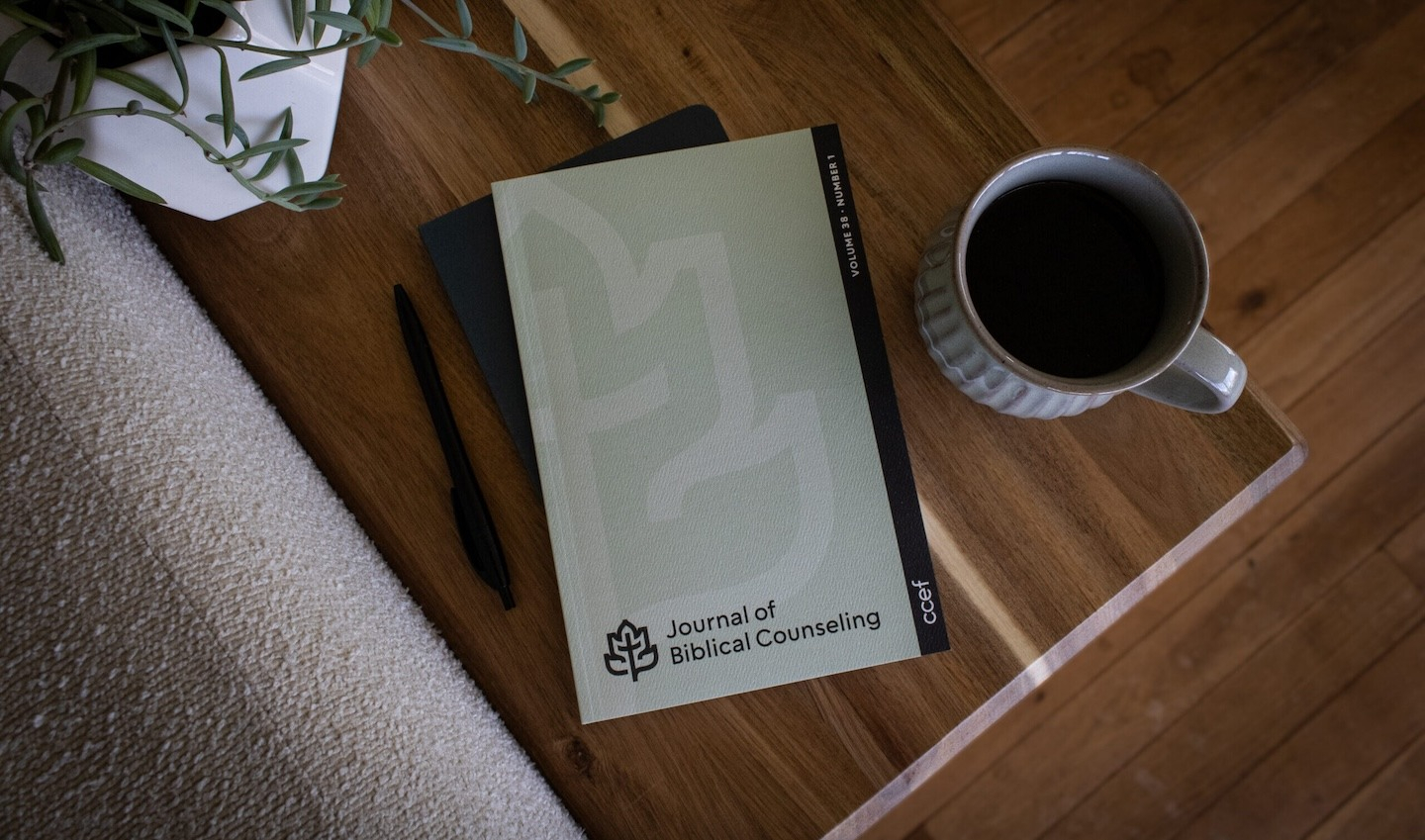
For more than 40 years, CCEF’s Journal of Biblical Counseling has provided a forum for the development of clear thinking and effective practice in biblical counseling. We do this by publishing articles that faithfully bring the God of truth, mercy, and power to the issues that face the pastoral ministries of counseling and discipleship.
Journal articles cover a broad range of biblical counseling and methodology topics. Many are written by CCEF faculty, and we also welcome articles from other authors, pastors, and practitioners in the field.
“There’s a tone of compassion and humility throughout all of the articles that you simply can’t miss.”
—Andrea Sharp, Lay Counselor
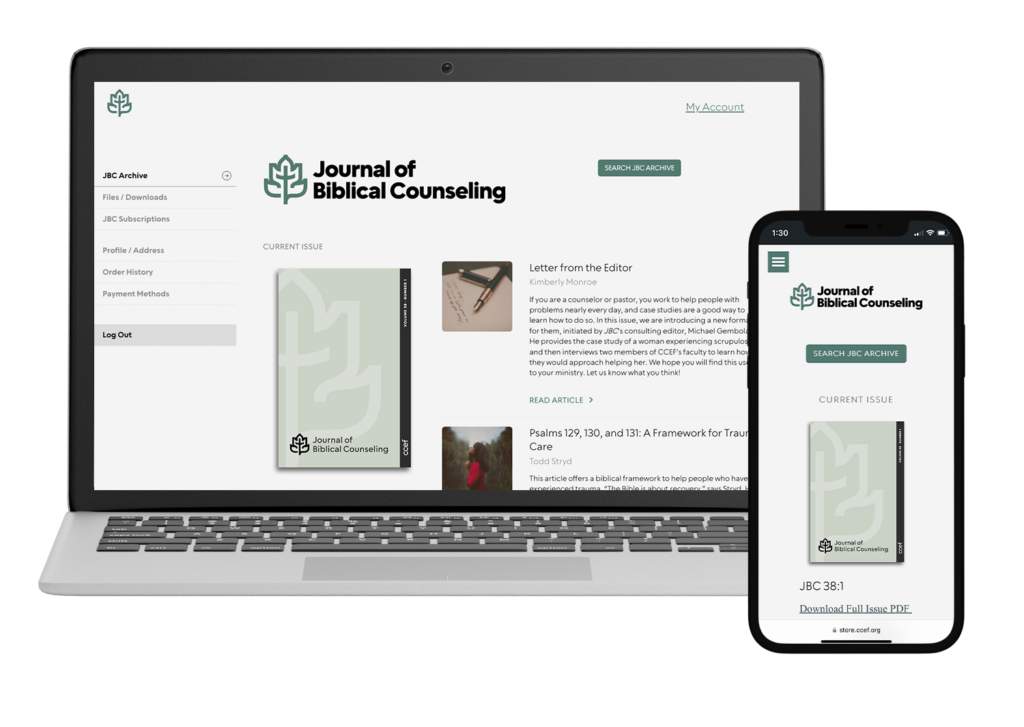
Access to the digital JBC Archive is included with all individual subscriptions. The Archive includes all previous issues (over 1,100 articles) and is searchable and integrated into our website. With the online Archive, you will receive each new digital issue immediately upon publication.

In this guest editorial, Ed Welch shares personal reflections on David Powlison, longtime senior editor of the JBC who died in 2019. Drawing on four decades of friendship, Welch traces the threads that shaped Powlison’s life and work: his conversion, his daily devotional habits, his view of the JBC as his “canvas,” and his deep contentment in Christ despite a lifelong experience of physical weakness. It’s a warm, personal portrait of the man behind the development of the journal, offered by someone who knew him well.

Though Philippians never mentions marriage directly, Aaron Sironi finds a fresh relationship paradigm for couples in the epistle’s call to stand firm and live “in a manner worthy of the gospel.” He applies this framework to the unity spouses need amid differences and difficulties. Practical and refreshing, this article invites couples to bring a familiar text into unexpected territory.

Mothers leaving abusive marriages often suffer a second, quieter wound: estrangement from their adult children who either resent them or side with their father. Darby Strickland frames this experience through the biblical lens of exile. She draws on God’s instructions to the Jewish exiles in Jeremiah 29 to guide these mothers toward spiritual growth. Instead of trying to change their children’s minds, this article offers a path forward rooted in faithfulness amid hardship.

Ministry can quietly breed discontentment—unmet ambitions, comparisons, a desire for a name rather than faithful service. Gunner Gundersen turns to Korah’s rebellion in Numbers 16 as an unexpected mirror for the pastor’s heart, tracing how dissatisfaction with one’s calling can curdle into bitterness and self-promotion. The article calls ministry leaders to notice and repent of discontent and to recognize that what they’ve been given in Christ is no small thing.

In this short but pointed essay, Ed Welch examines a pattern most people recognize but rarely name: the habitual, often unconscious instinct to deflect blame and accuse others when things go wrong. Concise and direct, the piece speaks to a tendency common to everyone, counselors and counselees alike.

In the final installment of this column, Michael Gembola reviews several recent books on counseling and pastoral care. They cover timely, thought-provoking topics—from a theology of danger and security to marriage and ministry, church hurt, and group counseling. Gembola concludes with reflections on the “Book Notes” project and how it has grown and challenged him.

“We believe that true, life-explaining insight into people necessarily involves thinking Christianly. Loving, lasting help necessarily involves practicing ‘counseling’ as one aspect of consciously Christian ministry. The deeper you gaze into what actually goes wrong with people—the weight of our sins and sorrows—the more clearly you see that Jesus Christ is essential to making it right.”
—David Powlison, Late Senior Editor of the JBC
Michael R. Emlet
Jonathan Holmes
Darby Strickland
Edward T. Welch
Brandon Peterson
Lauren Whitman
Michael Gembola
Kimberly Monroe
Aubrynn Whitted
We welcome articles from other authors, pastors, and practitioners in the field. Find out how to write for us below.
Though subscribers receive each new issue as it's published, you may want to purchase individual or past issues. You can find them below. (Note: all subscribers receive access to the online JBC Archive, which contains all past issues.)
This JBC collection for Logos includes 39 years of past articles (1977–2016; 99 issues). It contains the 36 issues of the Journal of Pastoral Practice as well as 63 issues of the Journal of Biblical Counseling (through 2016). The 99 back issues include nearly 1,000 articles, book reviews, sermons, interviews, and editorials.
In the Logos edition, you can search and read the entire collection in Logos apps everywhere, whether home, work, or mobile. The Logos edition currently includes issues through Vol. 30. Every few years Logos and CCEF will provide an update collection to add new issues to the collection. For more information about updates to your Logos product, please reach out to Logos Customer Service.
This resource requires Accordance 10.4 or above. This JBC collection for Accordance includes 40 years of past articles (1977–2017; 102 issues). It contains the 37 issues of the Journal of Pastoral Practice as well as 65 issues of the Journal of Biblical Counseling (through 2017). The 102 back issues include nearly 1,000 articles, book reviews, sermons, interviews, and editorials.
In the Accordance edition, you can search and read the entire collection in Accordance apps everywhere, whether home, work, or mobile. The Accordance edition currently includes issues through Vol. 31. Every few years Accordance and CCEF will provide an update collection to add new issues to the collection. For more information about updates to your Accordance product, please reach out to Accordance Customer Service.
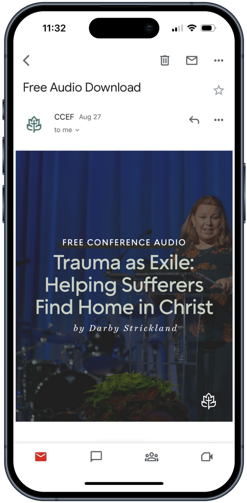
Sign up for our weekly email and receive access to a conference talk by Darby Strickland on helping trauma sufferers find home in Christ.
Loading form...
