Christian Counseling & Educational Foundation
1803 East Willow Grove Avenue
Glenside, PA 19038

David Gunner GundersenJonathan HolmesMike EmletTodd Stryd
August 31, 2026
This is part 7 of a 7-part series. Listen to the other episodes below:
•
How should biblical counselors engage secular psychology and the many other voices seeking to understand human desires and motivations? In this final episode of our 7-part series on CCEF’s distinctives, Gunner Gundersen is joined by Jonathan Holmes, Dr. Mike Emlet, and Dr. Todd Stryd to explore CCEF’s seventh distinctive: “Biblical counseling engages with the voices around us.” They discuss how biblical counselors can neither simply embrace nor dismiss other perspectives but instead engage them charitably and critically.
The conversation explores what it means to reframe, translate, and be provoked by observations from secular psychology and other sources, always interpreting and refining them through the question, “Who is the Lord, and what does he say?” The group considers practical examples from OCD treatment and trauma, as well as how this approach shapes pastoral care in the local church. Throughout, they emphasize that Christians don't need to be fearful of other voices or diagnoses. Instead, we can listen with curiosity, bring the richness of Scripture to people's experiences, and minister as fellow saints, sufferers, and sinners.
Mentioned in this episode:
00:00 Introduction: Theology and Secular Psychology
01:41 Meet the Guests
04:57 Reviewing CCEF’s Seven Distinctives
06:02 Engaging the Voices Around Us
07:48 Neither Embrace nor Dismiss: Engage
10:39 David Powlison’s Three Priorities
11:48 Reframing, Translating, and Being Provoked by Other Voices
15:01 What OCD Treatment Can Teach Us
16:59 Translating “Fight, Flight, and Freeze”
21:17 Shepherding People Beyond Reductionism
27:21 Why the Church Doesn’t Need to Be Fearful
31:32 What We Have in Common
33:49 The Church as a Choir of Voices
34:35 Closing with Psalm 19
Hello everyone, and welcome to our podcast from the Christian Counseling & Educational Foundation. We call these conversations “Where Life and Scripture Meet.” My name is Gunner Gundersen and I serve as the dean of faculty here.
Have you ever wrestled with questions about how Christians should engage secular psychology, or wondered how to think carefully, biblically, and practically about modern counseling theories? Launching this September 24th, “Theology and Secular Psychology” is a self-paced video course that brings together Dr. David Powlison’s enduring insights in over 30 hours of video instruction, you'll watch recorded classroom lectures from 2012, when Dr. Powlison taught the course. And it is a graduate level learning experience for counselors, pastors, ministry leaders, and thoughtful Christians who want a deeper understanding of the relationship between Christian theology and secular psychology.
The course includes guided reflections that are designed for personal growth and ministry without the pressure of assignments or grading. To celebrate this launch, we're offering discount pricing of $325 through October 31st. Learn more and register at ccef.org/school.
I'm excited to welcome to the podcast today, once again, our executive director, Jonathan Holmes. Thanks for joining us, Jonathan.
Thank you. Glad to be here.
Also joined today by Dr. Mike Emlet. Hey, Mike.
Hey. Glad to be with you.
And finally, Dr. Todd Stryd is also joining us today.
Hey, Gunner.
Hey. Well, today we are really excited to land the plane on our seven-part series on our distinctives. But before we rehearse those and dive into the seventh, which we're really looking forward to this conversation, I did want to ask just a question, to let our very curious audience continue to get to know us all. And that very important question is, what was your first car? What was your first car? Give us a visual here.
Well, I think my first car was actually in terms of one that I would say was my own, was probably the one that I had when Jen and I first got married. So her car kind of became my car, and it was an old trusty Honda Civic, but it was a stick shift, and that's actually what I learned to drive on.
And I just don't feel like they're making them like that anymore. So last time I went to a car dealership, I actually asked if they had a manual transmission, and they kind of just stared at me like I was speaking a different language. So there are many days I miss that, miss that manual transmission. But that was my first one, a Honda Civic.
Well, that connects with mine because mine was also a manual transmission. And I'm really glad that I grew up learning to drive on one of those. It's just a great asset to have, but also a good memory to have as there's less and less, as you said. I had a 1998, or 1988, Chevy S10. Royal blue. Royal metallic blue.
It had a custom tube grill, custom wheels. And it was… it was a low rider. And so I drove around Sand Springs, Oklahoma at 16 like I was ten times cooler than I actually ever have been, but it was a super fun truck to have. That was my first.
Nice. Well, I also had a Chevy, but it was a Chevy Chevette. It also was a manual transmission. I did not learn on manual transmission. I learned on automatic. So I bought the car and drove it the next day to Charlottesville, Virginia. So there was a lot of gear grinding until I learned how to how to use that thing.
That's three out of four so far. Todd, don't let us down.
Mine was automatic, so no manual. I had a dark blue Oldsmobile Delta 88, a V8 engine. It was a boat of a creature. And the best part about it is you could start the car without the key. And so at times, my vehicle was missing from the high school parking lot because my friends decided to take it on a little joyride.
Would have been helpful to have a manual there, wouldn't it? They can't get away with it. I love that vision. Todd, of you driving around in the V8 boat. All right, well, consider yourselves more seen and known than you were just two minutes ago by our friends that are listening. Thanks for letting us entertain you for a second.
Again, we've really been enjoying this seven-part series on our distinctives at CCEF. It's really been an enriching, enriching conversation to work through those together. It has involved, as you know, our executive director, Jonathan, as well as our entire faculty. And so before we dive into our seventh distinctive here, we want to take a moment and just reread our seven distinctives, because they really do work together as a package, as a whole, as an ecosystem
And so, Jonathan, could you kick us off and we'll read back through these seven before we dive into number seven?
Absolutely. Number one, “The personal God gets personal with us.”
Number two, “Scripture comes from the mouth of God.”
Number three, “We are embodied souls shaped by a world of influences.”
Number four, “Our hearts are active.”
Number five, “Help and change follow a path, but not a script.”
Number six, “Care and counsel are pastoral and at home in the church.”
And number seven, “Biblical counseling engages with the voices around us.”
And that number seven, “Biblical counseling engages with the voices around us,” is where we'd like to put our attention today. So I'd like to start by reading the description for distinctive number seven that is on our website at ccef.org/about. And here is that description to flesh out what we mean.
“Biblical counselors are not alone in our desire to help others. There are many helpful Christian voices out there, and yet there are differences among us. Differences in practice usually reflect different theological emphases, particularly differences in how to understand people and how people change. There are also many secular voices whose differences in practice reflect more fundamental differences about who God is and his activity in our lives. Our view of science is not a primary difference with other Christian and secular voices. Like others, we make observations about people that are useful to our counseling practice. We are also intentional to learn from the observations and experience of others, which includes the burgeoning Christian and secular literature. Biblical counseling adds, however, that all these sources are then interpreted and refined by the question, “Who is the Lord, and what does he say? When we do find differences between biblical counseling and other counseling theories, we aim to identify the strengths in those theories and represent others and their viewpoints accurately. When we disagree, we want to engage with respect and a generous spirit as if we were face to face.”
Friends, what stands out to you about that description as you hear it? Read again and start our reflections here.
I think one of the things that stands out is that there are many voices out there that we can listen to. And so what will we do with those with those voices? And I think our temptation’s, perhaps, to go in, in a couple of different directions, to just warmly embrace, or the opposite extreme kind of just coldly dismiss.
But I think what stands out from the description is an approach of charitably and critically engaging. So the difference between just embrace, dismiss. No, let's engage. So that's I think one of the things that immediately stands out to me.
I think another thing we we notice the science portion of that it's just identifying that there is true correspondence between what we feel in see and taste and touch and hear what is real that because we are image bearers and God has given us capacities and powers to engage reality, we can trust those things to some degree.
There's this common ground that whether we are secular or Christian, because we are God's, made in God's image and likeness. We have access to the reality that he has made around us. And that's common ground that we can do life with.
Yeah. One of the things that stands out to me when I read the description is just really CCEF's approach to not only people that we meet and how we want to interact with one another, but how we engage voices around us, and that when we disagree, when we're having conversations, we always want to approach those conversations with gentleness, respect, humility, a willingness to listen.
And I think that that's something that is tough right now in our culture to do when we think about engaging with voices around us. You know, like Mike, you said, we can either warmly embrace or coldly dismiss. It's easy to kind of gravitate towards either into the spectrum. And I think it really takes walking in the Spirit to engage those voices.
How do we think critically? How do we think compassionately? How do we think wisely? And that's something that I've always had just a deep respect for the faculty at CCEF. I really feel like you guys strive to do that in a really biblical way, but in a way that honors whoever it is that we're speaking to and that we're speaking about.
Yeah. One of the things that you're saying there, Jonathan, reminds me of David Powlison's seminal Journal of Biblical Counseling article from years ago, entitled “Cure of Souls and the Modern Psychotherapies.” And he talks about the priorities that we have in engaging these, these other voices. And he lays out the priority, the first priority, our first priority is to build a robust biblical model.
So, our starting point is Scripture and studying Scripture. Secondly, we do want to critique and reinterpret secular theories and practices from a biblical perspective. Right? If we believe Scripture gives us a lens on all of life, then that's really critical. But then thirdly, that we also learn from those from those secular sources. There are things, observations to, to take note of. And so I think, I think that those three priorities we keep before us.
Mike, I think you're getting at, and that article by Powlison is getting at, this key sentence in the middle of the description, which says that “Biblical counseling adds, however, that all these sources are then interpreted and refined by the question, ‘Who is the Lord and what does he say?’”
And I think there's some different concepts that we could use to get at that vision for interpreting and refining:
One example would be reframing. How might we take a seemingly accurate observation from a secular source, and a helpful observation from a secular source, and reframe it biblically?
Or another concept would be translation. How do we take a seemingly accurate observation from a secular source and translate it into biblical language in a way that communicates a full biblical framework and worldview as we look at that?
Another concept is the idea of allowing observations from the world around us to provoke us back to a deeper look at Scripture, where we may see things that we didn't see initially and be invited into further deep study in the riches of Scripture.
Can we talk a little bit about some of those ideas of how we do interpret and refine the things that we're seeing out there by the Word that we've been given?
Yeah, that's a great question, Gunner. I think that when I think about reframing, I think what is helpful to understand and because we have access to Scripture and what God says at the same time as we do believe that our fellow humans do still have access to reality, they still are in touch with the real world, that when they see something accurately, when they notice something that is true, the fatal flaw tends to be that they don't…they can't situate it properly. It doesn't fit in the true right way in reality.
And so one way to think about it is they tend to overvalue the thing that they are noticing or observing. This accurate thing is then overvalued. It's made too much of, it sometimes may even become monolithic or salvific. And it's important. But the other impact of that is that it keeps them from seeing the other things that are probably more important.
And as Christians with the knowledge of Scripture, we would say they miss the heart. They miss motivations and desires that are God's Word. They miss a proper understanding of a spiritual world, etc. so a reframing could start out with they are probably seeing something that is accurate, but it is situated in a way in which it is given more importance than it probably has, and they are simultaneously blind to many other things that are more important. Most likely.
Yeah. One way I appreciate that, Todd, that's been helpful to me. One way that I've been, if you will, provoked, has been in looking at and reading about the secular methodology in approaching OCD and in particular, exposure and response prevention. In other words, someone who's struggling with obsessions coupled with compulsive actions, a method, the methodology is refraining from those compulsive actions. And the longer you refrain from them, the more the associated anxiety decreases and you're able to move forward increasingly.
That was provocative in the sense of like, okay, how do I think about that biblically? Right. Because it's something that's concrete. It's been shown to be important in helping someone overcome this struggle. And I think it forced me to consider like, well, this is really this is helping a person face their fears in the presence and power of the Lord.
And so it's appropriate. It's a good concrete step. But I want to situate that in a world where God is central because he is. And I think that's the… as you were saying, Todd, missing that Godward aspect that's crucial that we, you know, that we that we seek to have that be front and central. But it was provocative to read about some of this methodology, as you say, it sent me back to Scripture.
Todd and Mike on that, you know, reframing translation and provocation, maybe I'll hit home on that translation piece. You know, I think about when you're working with counselees who have suffered from trauma or acute anxiety, right? We know observationally that sometimes when those troubles come on people, you can have different responses. And so secular psychology gives us these categories, or buckets, of fight, or flight, or freeze.
And they're helpful, right? They kind of demonstrate, hey, when trouble or anxiety comes on us, we tend to have these different categories of how we react. And you begin to think about translation work, right? We go back to Scripture and we say, well, Scripture actually identifies these. It maybe doesn't use the words “fight, flight, and freeze,” but Scripture definitely identifies the pull of a human heart that when it's under trouble, it wants to go somewhere, it wants to escape.
It wants to cling to something, it wants to find a refuge in something. And so that's where we can do a little bit of the translation work. Right? So when we're talking to a counselee, who's perhaps been shaped or informed by that language, right, we don't shame them for it. We don't try to correct them out of it, but we actually show them something deeper and more beautiful in Scripture.
And that's where I think, like both of you are saying, that God's word referent is so often missing an active heart that is in the midst of all of that trouble is often missing and just biblical language and categories that really enrich what's going on. So that's where that reframing in translation and provocation work, I think, is so important for us.
It struck me, as I combine something you said, Todd, and something you just said, Jonathan, that there's a clear sense in which situating something in the fullness of what God has said and how he's revealed himself, is an enriching process. It enriches the observations. It has a purifying effect on the dross that was part of perhaps an original observation, and it presents something that is part of a robust biblical storyline of who God is, who we are, what he is doing to pursue us and relate to us and draw us into this relationship with himself, and then to sanctify us along the way in community. So, that's situating that’s deep and enriching.
So, on a practical note, as we're seeking to, to help people, how might we practically shepherd someone who comes to us with maybe a reductionist view of their own issues, and maybe we help fill out their view of what's going on, or what the path forward may be.
Yeah, I think well, I think that's inevitable, right? Because there's so many, so many voices, so many perspectives, so many experiences that people may have had before we ever get a chance to sit down with them and talk with them. So I think that's bound to happen. And I think if we're sensing the person is coming with a very narrow view, maybe they have a particular secular theory or concept that is their overriding way of understanding things, or maybe it's a biological reduction. It's all just something's off with their body, or even, yeah, it's all the satanic influence or attack. I think our starting point is always to seek to understand the person, hear their story. Also get a sense of why these perspectives have been helpful, how they've been informed. Because I think if we don't do that, if we don't start there and we just kind of come in and try to offer a corrective it, you know, they've been living with an understanding for a while.
And so I want to be careful. I want to make sure that I've understood their experience. And then, you know, maybe be able to say, “Well, have you ever thought about this or could we look at this place in Scripture that that might help to flesh out a little bit more some of the things you're talking about?” I think that's an important thing to do.
Yeah. I love that, Mike. And just to reiterate that, I’ve just found that, yes, there is a time and a place to correct and deconstruct somebody’s reductionist understanding of things. But most of the time we in practice, we have the opportunity to make a big impact by adding the good news into this person's life instead of, let's say, trying to subtract and correct by situating it properly.
The good news, the addition of a God who loves them, in which they have a covenantal relationship and their hearts are active. That is good news. And it is enriching and expanding. And so we are not so compelled, as you said Mike, to do the work of correcting and critiquing of what they believe, wrongly or incorrectly.
There will be plenty of time for some of those things. But the careful, loving introduction of the beautiful good news of a God who is present and a connection to their own heart, and a salvation from sin and guilt and death. It is just a wonderful place to be able to minister to someone.
I agree, and I think that, you know, when we think about our priorities when it comes into counseling, Mike, like you said, our first instinct and our goal is not to deconstruct and to, you know, offer an entire systematic theology course. You know, in the first session, when you look at 1 Thessalonians 5:14, right, Paul says, “Admonish, really, encourage, the faint hearted. Uphold the weak. Be patient with all.” Right, two-thirds of the three groups of people that Paul is talking to us about there require sensitivity and grace and compassion as we enter into conversations, so we don't come in, you know, both guns blazing. We come in with curiosity and understanding. And I think most people, or at least the counselees, have been privileged to meet with, they feel the reductionism already that secular voices offer to them.
I'm thinking of one guy in particular who just a 20 to 25 year history with pornography and various sexual sin, and he had seen a couple of different counselors, kind of the sum total of it was, “Hey, you're a guy you've got out of control hormones and drives and desires. Knock it off. You know, try these different, you know, how to methods, etc. but it just really left him lacking.
He would just fall into these cycles of, you know, trying to do the right thing and then falling into sin, trying to do the right thing. And he was, frankly, exhausted. And that's a reductionist view, right, of, “Hey, just stop doing this one thing. And, you know, the problem is going to get better.” So we go to somewhere like Jeremiah 2:13, right where Jeremiah talks about just digging empty cisterns.
And that that became a metaphor, that became a place where we began to talk about his heart, talk about what he was after, talk about just, what, 25 years of that kind of sin, what that does to your body, what that does to your brain. And so that reductionism, I think, can be addressed. But it's oftentimes addressed, I think through discernment, through time, through relationship building with your counselee. That doesn't tend to be our very first priority, though, when we come into the counseling room.
Yeah, yeah. And I think implicit in what you're saying, Jonathan, is that truth is beautiful. It's compelling. And so the opportunity to bring or, what Todd was saying, “add to,” helps people to see. “Oh wow, there's much more here. And that is compelling. That does move me towards the Lord in fresh and deeper ways.”
Something I hear us saying is that when someone, including ourselves, has a reductionist view of our own issue or issues or our challenge that we're currently facing, then there's then a temptation to also have a reductionistic view of our resources, what's available to us to help. And as you said, Todd, there is so much to be added, so much expansion, I believe, is the word that you used of someone's vision as we pray that God would bring more alive in them a faith and a hope and a love that's accessing and expressing these things.
I think enriching is just the word that keeps coming to mind that really belongs in that sentence in some ways, and is, I think, implicit in that sentence, in the description, that biblical counseling adds that all these sources are then interpreted and refined by the question, and often enriched by the question, “Who is the Lord and what does he say?”
So, could we talk for a moment about why and how this distinctive matters for our local churches, as we say all the time, and seek to remind ourselves of consistently? The second half of our mission statement is restoring counseling to the church, and we mean local churches, bodies of believers that are living in community with one another, with pastors, and ministry leaders, and deacons, and faithful church members seeking to learn how to grow in love for one another in this community project called sanctification on the way to glory, can we just talk about how does this particular distinctive land in and influence our local churches? What are some of your hopes there and some of your encouragements
I think what sticks out to me first is that, you know, if we think about the sequence of all the distinctives that we've walked through and that this is the the final one, it it really highlights that we have a solid, rich foundation by which we can we can engage the world around us, that we don't have to be fearful.
In fact, we can be confident and curious. We can be curious about the idea, but also about the person who holds that idea. And we have a knowledge that that God has given us the categories to think about what's happening behind the scenes here and that very likely what this person or this idea, there is something accurate that they're engaging with, that there's some common ground that we can understand as, it's not inconceivable that they are thinking this, feeling this, understanding this, but we can have compassion and understanding that this is something that is situated in a world in which they cannot see, they cannot see the full, expansive nature, nature of God's world, of God's love, of what it means to be human. So just to come back around that we don't have to be afraid. We have exactly what we need to engage the voices around us, and we can have confidence that Scripture is sufficient to frame this properly, then for us to do good work with.
Yeah, I appreciate what you're saying in terms of not not having to be not having to be fearful that I mean, in our in our local churches, we'll have opportunity to to rub shoulders with a lot of people who have heard a lot of different things or perhaps have particular diagnoses and have other people who are providing care for them, other providers.
And sometimes I think we… if that's the case, we can feel like, “Okay, well, they're seeing the expert, or, they have care in another place. But I'll give you an example. I mean, in a former church, a dear brother had been diagnosed with schizophrenia and he was under the care, rightly, of a psychiatrist. He was on medications. And I think what was important to realize is that we don't offload pastoral care, or discipling, or friendship. There were so many ways in which we could engage with him. How does Scripture speak to the accusatory and condemning voices that he's hearing? What does it look like just to befriend him? To go to lunch with him, to hear about the hardships that he's that he's suffering into, perhaps meet the material needs as well.
So sometimes I think it's important to remember as you as you said, we have a rich and solid foundation and we don't have to be experts in all these other, all these other arenas. We but there's so much that we can do with a particular person. And I think that's important to keep in mind under that umbrella of, like, we don't have to be fearful about encountering other worldviews or ways of thinking or people who, you know, who have been particularly either influenced or are carrying a particular diagnosis, even.
Mike, the word that stands out as you were talking, that idea of, you know, “not needing to be fearful.” And Todd, you, you picked it up too. I think one of the things that comes about with secular language and labels is it almost creates a distance between us and other people, right? It makes people with these various labels, and these diagnoses feel so much different than us, kind of places them outside of the reach of our own gifting.
But even the hope of the gospel and what the local church does is the local church says, “No, we're we're all in this together, right?” Scripture starts with, this is what we have in common, right? We are image bearers of the living God. And then Scripture begins to tell us more about who we are. It talks to us about how we all experience fear, how we experience trouble, and hardship, and relationship problems, and things that make no sense to us.
All of that is within the pages of Scripture. And so again, like we oftentimes say at CCEF, we're actually more like the people that we meet with than we are different. And I think that there's a wonderful “de-formalization,” almost of care that can take place in the church, that is a beautiful thing, right? That we come as fellow saints, sufferers and sinners with other people.
So the most important thing isn't the outside language that maybe defines and describes us, but it's what we have in common. And so when you start from what you have in common, that doesn't have to be a spot of fear, then it doesn't have to be a spot where you feel like, “Man, I don't have anything to offer this person who's struggling with schizophrenia or obsessive compulsive disorder, who or who might be on the spectrum.”
Scripture says, well, hey, here's a first step. How are you doing? How can I help you? How can I pray for you? And I just think that's a wonderful thing that happens in the church that frankly, at least in my from what I understand, like doesn't happen anywhere else. And I think that that's in many ways God's intention and design for the church is this place, this body where we are growing together, where we're struggling together, where we are helping one another in the Christian walk.
It's a beautiful vision of allowing the voices that God has placed right around us in the local church, who are seeking to minister his Word to us, help us interpret the many swirling voices beyond that we so often hear and sense blowing through our lives, telling us any number of things about who we are, why we're here, where we're going, and what resources or community we have, if any.
And that makes me so grateful that God has established a choir of voices in healthy local churches that are speaking the same word to one another, and embodying it, and moving toward one another in love. That's the opportunity that our churches have and why it's such a pleasure and a burden of ours to seek to restore counseling to the church.
Brothers, thank you so much for joining this conversation. Todd and Mike, really appreciate your camaraderie, your colleagueship, and your insights. Jonathan, thank you so much for joining us for this entire series and lending your voice and wisdom to what we're doing here. We've talked about biblical counseling engaging with the voices around us. And so I'd like to close with the central voice of all, and the voice that we love, the Word that we love, and why we love it.
This is from Psalm 119 as we close out this seven-part series on our CCEF distinctives:
“The law of the Lord is perfect, reviving the soul. The testimony of the Lord is sure, making wise the simple. The precepts of the Lord are right, rejoicing the heart. The commandment of the Lord is pure, enlightening the eyes. The fear of the Lord is clean, enduring forever. The rules of the Lord are true and righteous altogether.
And finally, let the words of my mouth and the meditations of my heart be acceptable in your sight, O Lord, my rock, and my redeemer.
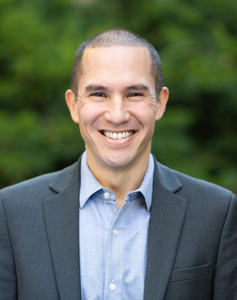
Dean of Faculty
Gunner is the Dean of Faculty at CCEF, where he has served since 2024. He holds a PhD in biblical theology from the Southern Baptist Theological Seminary and a master of theology and master of divinity from the Master’s Seminary. Prior to joining CCEF, Gunner served as a lead pastor for seven years, after working for fifteen years in Christian higher education as a resident director, director of student life, associate dean of men, and biblical counseling professor. Gunner has a passion for helping believers live consciously in the story Scripture tells, equipping the local church for interpersonal ministry, strengthening pastors, and biblical preaching and teaching. He has published the Psalms notes for The Grace and Truth Study Bible (Zondervan, 2021), What If I Don’t Feel Like Going to Church? (Crossway, 2020), and numerous essays and articles on the Psalms and adoption.
David Gunner Gundersen's Resources
Executive Director
Jonathan Holmes is the Executive Director of CCEF as well as the Founder Emeritus of Fieldstone Counseling, where he served for over nine years. He also previously served on the pastoral teams of Parkside Church and Parkside Green for fifteen years. Jonathan graduated from The Master’s University with degrees in biblical counseling and history and received his MA from Trinity Evangelical Divinity School. He is the author of and contributor to a number of books, including The Company We Keep, Counsel for Couples, Rescue Skills, Rescue Plan, and Grounded in Grace: Helping Kids Build Their Identity in Christ. Jonathan has written for Christianity Today, The Gospel Coalition, the Biblical Counseling Coalition, the ERLC, and CCEF’s Journal of Biblical Counseling. Jonathan serves on the Advisory Board for the Association of Biblical Counselors (ABC) and the Council Board for the Biblical Counseling Coalition (BCC). He is an instructor at Westminster Theological Seminary in the Master of Arts in Counseling program, and he speaks frequently at conferences and retreats. He and his wife, Jennifer, have four daughters.
Jonathan Holmes's Resources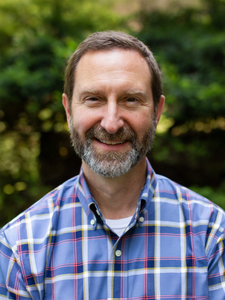
Faculty
Mike is a faculty member and counselor at CCEF, where he has served since 2001. He holds a doctor of medicine from the University of Pennsylvania and a master of divinity from Westminster Theological Seminary. Prior to joining CCEF, Mike worked as a family physician for eleven years. He has particular interests in working with ministry leaders and with those who struggle with anxiety, depression, and OCD. He has published numerous books, including CrossTalk (New Growth Press, 2009), Descriptions and Prescriptions (New Growth Press, 2017), and Saints, Sufferers, and Sinners (New Growth Press, 2021).
Mike Emlet's Resources
Faculty
Todd is a faculty member and the counseling coordinator at CCEF, where he has served since 2005. He holds a doctor of psychology from Immaculata University and a master of divinity from Westminster Theological Seminary. He has experience as a hospital chaplain, crisis worker, and university counselor. He has written a minibook entitled Schizophrenia: A Compassionate Approach.
Todd Stryd's Resources
Sign up for our weekly email and receive access to a conference talk by Darby Strickland on helping trauma sufferers find home in Christ.
Loading form...