Christian Counseling & Educational Foundation
1803 East Willow Grove Avenue
Glenside, PA 19038

Darby StricklandDavid Gunner GundersenJonathan HolmesLauren Whitman
August 3, 2026
This is part 5 of a 7-part series. Listen to the other episodes below:
•
In this fifth episode of our series exploring CCEF's seven distinctives, Gunner Gundersen is joined by Jonathan Holmes, Darby Strickland, and Lauren Whitman to discuss our fifth distinctive: "Help and change follow a path, but not a script." Together they explore the importance of dependence on the Lord and his work in the lives of those we help. They consider the importance of seeking input from others, the dangers of following a script, how to navigate our feelings of inadequacy, and why this distinctive matters for our local churches. Rather than fixing problems or changing others, our role is to be fellow travelers on the path God is already leading them on.
Mentioned in this episode:
00:00 Introduction & Invitation to the 2026 Conference
10:10 Reflections on Distinctive #5
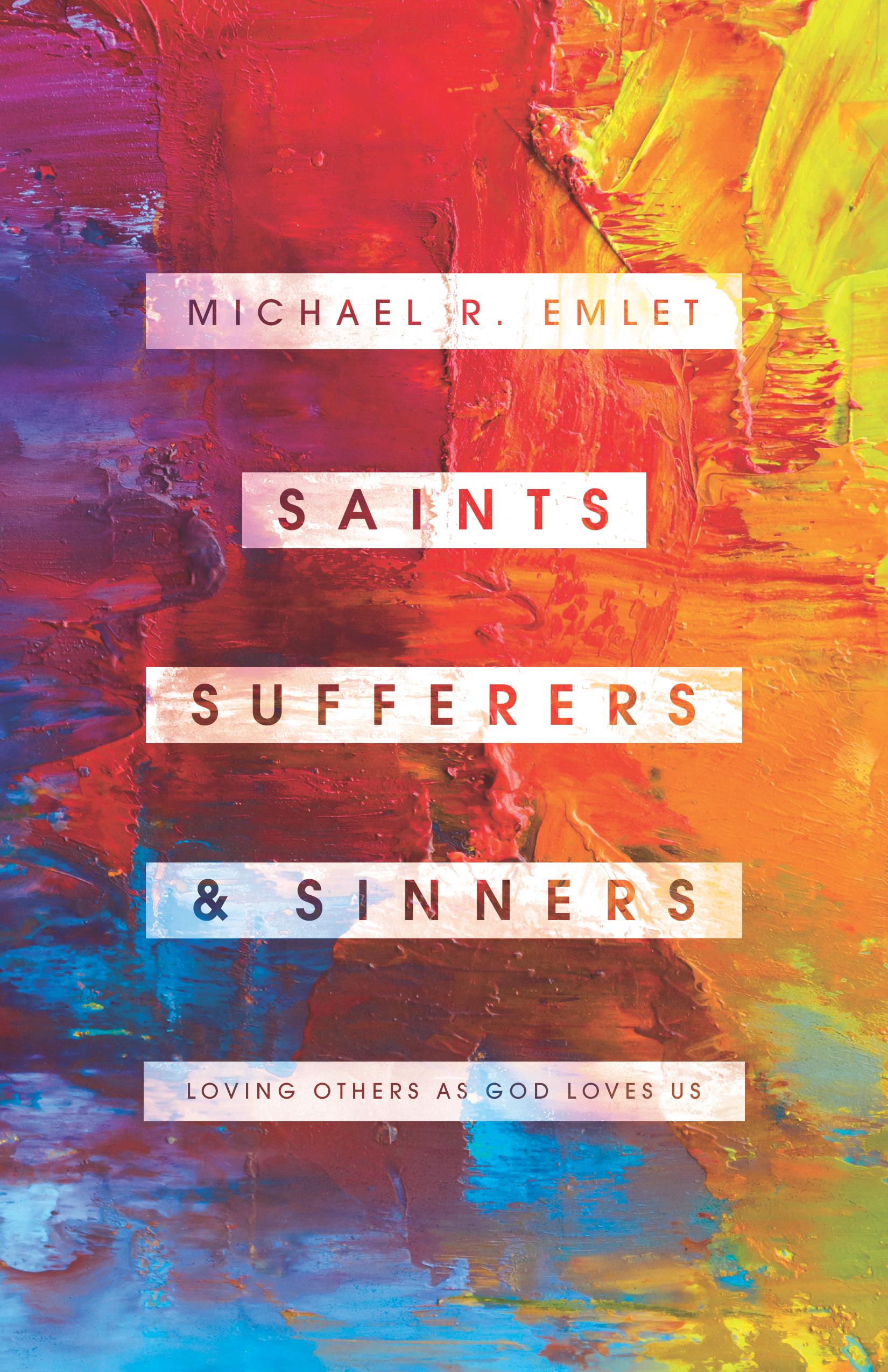
14:31 Approaching Others as Saints, Sufferers, and Sinners
21:19 Seeking Input from the Person
23:40 The Dangers of Following a Script
27:31 Depending on the Lord When You Feel Inadequate
33:10 Why This Matters for Our Local Churches
Hello everyone and welcome to our CCEF Podcast: Where Life & Scripture Meet. My name is Gunner Gundersen and I serve as the Dean of faculty here at CCEF. Our annual CCEF conference is right around the corner, and there are just a few more days to register before our price increases. Extend your summer by joining us at the beach in October for our conference, Fully Human: Life as God Designed in Virginia Beach. You'll interact with other Christians who desire to learn more about our God who became human and who equips us to care for others in our human weaknesses, limitations, and suffering. Register at ccef.org/nc26. That's ccef.org/nc26.
I’m excited today to welcome three of my colleagues to the podcast. Our Executive Director, Jonathan Holmes, and faculty members Darby Strickland and Lauren Whitman. Welcome, everybody.
Thanks. Glad to be here.
Hi, Gunner. Good to be here.
Hey, Lauren.
Hey, Gunner.
Hey, Darby. Well, we want to kick things off with a warm-up question. We know that the masses are eager to know the answer to this. And a little description, maybe. And that is: What is your favorite drink? You can pick the genre. It's your favorite. What is your favorite drink?
Well, if it's in the morning, I'll just go ahead and get things started. If it's in the morning, it's coffee. I probably drink way more than I should be admitting, but I drink a lot of coffee morning and afternoon and then normally evening sparkling water, so any kind of sparkling water will do. But those are probably my two favorites, if I could have two.
So that’s three coffees a day as a general routine.
Maybe add a couple of numbers after that. But yeah, three to five, three to six. More than I probably should be doing right now.
So can you tell us a little more about your order? Like what is in your coffee?
Just black. So I'm just straight up black coffee or an Americano. So I think that's part of the reason why I tell myself I can drink more, because I'm not adding cream and sugar, but it's still the caffeine, which I know I need to be limiting my intake there. But yeah, just a black cup of coffee.
That sounds great. Justifying reasons are always helpful.
Yeah.
Well, I'll go next, because coffee is also my favorite drink no matter the time of day, although I don't drink it after noon. But I made it through college without starting to drink coffee. It wasn't until, it wasn't until I was 22. I was living in Amsterdam, working at a Christian ministry. And you know, coffee over there is very social. You go out to cafes with people to talk and just socialize. And that was when I started drinking coffee was that year and I've, yeah, perfected my daily drink. I use freshly ground beans and a French press, dark. But I don't drink it black like Jonathan. I do add cream, but no sugar.
This is so, this is so informative. I'm also impressed that you went all the way through college without any.
That's amazing. Lauren.
Yeah, it just wasn't really a thing that I remember. People really, I don't remember like, yeah, coffee shops on campus or anything like that. I don't even remember friends really drinking coffee. It just wasn't like out everywhere, the way it is today, I feel like. But I might be misremembering; it was a long time ago.
Yes.
Lauren, Lauren, I agree with you though about the social aspect of coffee. I like that too, because I mean, for the most part, I think most people either like coffee or tea or some kind of drink. And the social aspect of coffee I think is fun.
Yeah, yes. Although now I just drink it, you know, mostly functionally. Right. First thing in the morning.
Yes, yes. Very true.
I never got into coffee. I tried a couple times, and the second time when I knew it wasn't going to stick, I was actually on a short-term missions trip to New Zealand, and I told them I didn't drink coffee and they said, well, where have you had coffee? I was like, oh, you know, like Starbucks. And they said, oh, that's not real coffee. And so let's give you something that's we think is going to do the trick. So I had it and I didn't like it, and I thought, if I can’t enjoy coffee here on this beautiful island of New Zealand, when they tell me this is better than anything that you've had, I don't think it's in the cards for me. And that's when I knew.
I respectfully disagree, Gunner. You have, nobody likes coffee in the beginning. You have to push through.
That's what I've heard. If I've only done it a few times, it's such an acquired taste, I probably have not even tried. Darby. How about you?
Yeah, I'm with you. I'm an anti-coffee. I don't know, like, I don't even like the smell of the coffee. So much of my married life, my husband is buying contraptions to make coffee and that does not release the aroma. But yeah, my favorite drink is actually just it's more of an experience. I think it would be, and a pretty mundane one, but symbolic of just summer. I really like a good Sonic cherry limeade. There's something about all that little ice, summer trips. Yeah. I really just love to get, on occasion and rare occasion, I think that's just why they're so special, but often it has to do like coming back from kayaking or a trip home from the beach and we get to stop. And I really do enjoy myself a Sonic.
Darby, I feel like there's something so nostalgic about Sonic and the drive through and the ice, right? Because you have, the ice is what makes that cherry limeade just really kick. It's so good.
It's the noise. It's everything about that. Everything. It's the noise. Yeah, it's everything about it. Yeah.
My wife fell in love with ice for a couple of years and had some real specifications on what kind she enjoyed, so I totally understand that. And I'm not surprised that your drink would also be related to time on the water. I know that's something that you really love and enjoy. For me it would be chai. I love a good chai. I took a trip to India a number of years back and brought home with me some loose leaf chai, and I would have it every morning, and then when it was done, I felt like what has happened to my life, I need this. And it had just become such a great taste and tradition. So I enjoy chai at a variety of places.
That's almost to coffee, Gunner. That's almost to coffee.
I'm almost there. I'm halfway to coffee with chai.
Yes, yes, I agree Lauren, we've gotten, we've got Gunner close. If he's at chai level, I think we can get him to coffee level.
In a short time, you almost persuade me to be a coffee drinker. Well, guys, it's fun to hear about some of these distinctive drinks for each of you. And that's a perfect segue, isn't it, into our podcast topic. We've had a great time recently doing a series on our seven distinctives here at CCEF. These are particular priorities and emphases that we love, that we long to be accents of our ministry, flavors of our ministry, if you will. Things that are really important to us to emphasize as we go about our work. And so today we're going to be covering our fifth distinctive. But before we do that, we want to just read through all seven of our distinctives so that you can hear them again, because they really do work together, and they really are meant to be an interwoven picture of what we hope our ministry looks like, and the effect that we pray that it might have in the lives of those that we serve.
So we're going to do this in a round robin style. So we'll go ahead and jump in and read these seven distinctives to you.
The personal God gets personal with us.
Scripture comes from the mouth of God.
We are embodied souls shaped by a world of influences.
Our hearts are active.
Help and change follow a path, but not a script.
Care and counsel are pastoral and at home in the church.
Biblical counseling engages with the voices around us.
So again, those are our seven distinctives here at CCEF. And while those are each stated in a brief way, we have fuller descriptions of these on our website. If you'd like to read those, that's at ccef.org/about, ccef.org/about. Today we're going to discuss distinctive number five, which again says, help and change follow a path, but not a script. And I'd like to read the description here, and then we'll riff on this a little bit and chat about what this means and how it stands, what stands out about this distinctive to you. Here's the description: The care of souls is not formulaic or predictable. What helps one person might not help another. When you listen to people's stories, you can be helpful in so many ways, because God works in so many ways. Some will be strengthened by a particular text of Scripture. Others will be moved by a personal story that helps them see God and the relationship to him in a new way, an act of love, giving a taste of God's kindness, or the death of a friend, painfully reminding them of human need for redemption of body and soul. God uses people, circumstances, his Word, our own choices, and the direct power of his Spirit. Humility is therefore an essential quality of a helper. We are constantly reliant on God, the wisdom and experience of others, and the input of those we help. Taken together, a common path emerges. Our help joins our knowledge of the person with the knowledge of God. Our help unites the person's story with God's story. We aim to know the person accurately, meaningfully, and compassionately. We aim to know God through His Word, in which we understand his words, in their context, and as a larger story of redemption and love. In response to him, we give him our trust, love, and worship. All of us are saints, sufferers, and sinners. We will see good, hard, and sinful things in ourselves and in the people we help. We aim to look for the good, hard, and sinful, in that order. So that's our description for distinctive number five. What stands out to you about the description?
I love that it honors the complexity of people and of our hearts and of even just our situations, which and then it requires of us a certain level of humility, right? If people aren't that simple to figure out, if the process of sanctification isn't a formula, it really requires us to be humble learners of the people we’re caring for, of Scripture. Yeah. And it's just, it's a sweet invitation.
Yeah. Change follows a script, and I'm meeting someone, then I already, in my mind, kind of know where to go with this person, what to say, what Scriptures to go to. But instead, we're saying change actually follows a path. And a path is very different, because paths can lead to different places and have different kind of variations along the way. And that's exactly what individuals need, right? They don't need the same path. They need a path that is well suited to who they are, who the individual is. And that's really what we're trying to do when we welcome people into a counseling relationship, is we're trying to get to know them as an individual and find out where Jesus already has them on their path, where he's already leading, where he's already guiding, and join them on the path instead of inviting them into a script we already know how it's written.
One of the things that stood out to me as you guys were commenting on that, and it comes out from the description, is just the priority this places on listening and not as much on talking, right? So if we realize that what is going to be most important to us in that counseling session is listening to our counselee because we need to know what's on their heart, we need to know what troubles them, what tempts them, what weighs heavy on them. Our posture, Darby, like you were saying, it's going to be one of humility, one that comes in to listen to them. And I think sometimes, you know, younger counselors or counselors that don't have as much experience, we come in heavy with the talking, the script, the diagnosis, the predictability, and part of the learning curve, I think, in counseling is just realizing just how much of counseling ministry is listening to people and reflecting back to them what you're hearing them say. So I think this distinctive really helps prioritize that in the counseling session.
Lauren, I love how you highlighted how it's not that the path starts with our help, but that people are on a path already, and discerning where they're at and in a sense joining them in that place and beginning to help them and engage with them in that place as learners and listeners first and all along the way, I think, is so significant that their path has already been walked and they're currently on it. And I want my orientation to be first of the Lord and then to where they're at, and not with a preset script that I can just kind of drop on to any interchangeable person.
Right. And that's part of the humility, too, which is like, God is already at work in this person's life. And it's my privilege, my joy, my honor to get to join in and listen, to hear, what is God already doing? Where has God already led you? What has already been helpful? Where have you stumbled? Where have you tripped? Where has it been hard, right? And that's because of the reality that, one, like, you know, people aren't on this path alone, that it's God himself who initiates change within his people, and then two, he is present with them in that change process, right? He doesn't begin it and then leave them to it. But he walks with us faithfully all along the way. So it is, in a sense, us kind of catching up of, what's God already been doing, what's he already been up to, and how can I join you on that path where God is already leading?
That I find to be like one of the most fruitful questions that I often ask anew counselee, is what have you already tried? Or what verse has been particularly meaningful to you? And you just learned so much about where the Lord's holding them or where they're struggling. But that's just such a fruitful question. Where has the Lord been with you in this season?
One of the things this description highlights near the end is engaging with the good, the hard, and the sinful, and it references the idea of any believer is a saint, a sufferer, and a sinner, simultaneously. Why is it important to have those particular categories in mind as we minister to people and have those as lenses through which we would see the folks that we seek to help?
I think having all three of those in view help us think of a person comprehensively across all categories. We might have someone come into our office who's struggling with a really destructive sin, and we might be prone to forget that they're an image bearer before the Lord, who truly loves him but is struggling to worship well. Or we might forget to see that their struggle is actually suffering for them. It can be the same thing with someone who's really suffering. If we only concentrate on how they're suffering, we might lose other aspects where Scripture would address their whole person. So I think having those three lenses helps us be, I don't want to use the word balance, but helps us to correctly prioritize what needs to be prioritized in any given moment and just constantly be looking, what am I missing? Am I missing a larger category into which this person fits?
I know for me, early on, it was often tempting to try to start with the problem. And even if that was a self-identified problem or the presenting problem, if you will, it was just tempting to start there and then to seek to unpack that, and let's dive in there. I love, Darby, how you mentioned earlier that there's this starting with the good in terms of how is God at work in your life, what maybe is a promise that's encouraged you, or a Scripture that's been meaningful to you, or something particular that you have seen God do, or a way you've seen him be with you that has been encouraging and to be able to celebrate that, to be grateful for that, and to join in the work that the Spirit is already doing. I think that's such a fuller way to minister than some of the other tempting ways to go about it.
Yeah, I think just having the good, hard, and bad, saint, sufferer, and sinner, it's just true to life, right? Because it's true of all of us. We are all of those things. And so I think in counseling in particular, as you're saying, Gunner, you know, it's easy to be problem-focused because people are likely reaching out because they have a problem, and yet they are a whole person, and they have other things going on in their lives too. And I want to know those things too, because maybe even we can leverage, you know, some areas of strength or areas where they've already grown to help with the present problem. Right? So if we're only problem-focused, then we're going to be potentially missing aspects of their personhood that can be really helpful for the change process moving forward.
I think one of the examples that you see in Scripture where Jesus himself is doing this in ministry is in the seven letters of Revelation to the churches. And what you see in each of those seven letters is a unique group of people in a unique context, and Jesus is up to good, identifying hey, here's what's good in your situation, here's where you're persevering well, here's where you're standing against evil. Here's what's hard for you, here's where people are persecuting you, and maybe even a couple of categories where here are things that you're not doing well and that need improved. And, you know, I've always thought to myself, Jesus could have just approached those seven churches with a script, right? He could have just had one all-purpose letter, circulated it to all seven churches. But he doesn't do that, right, because every church, which is filled with people, are unique. And so he's going to approach them as such, and he's going to enter into those conversations with them in really intentional ways. And you see those categories that we've been talking about of good, hard, and sinful, or saint, sufferer, and sinner, just kind of show up in really beautiful variation in all of those different letters that John records for us.
That's making me think, Jonathan, about Paul's epistles, right. It's very much the same way, right? It's the same tiered, robust understanding of who they are, where they're struggling, and where they need the Lord, and his ability to see the whole of them. You understand he has a level of affection for them, like his love really comes across because he really knows who he's writing. And I think that's one of the beauties of being able to counsel in this way, is because you look at people differently and it stirs an affection for them, and it even stirs an affection for who the Lord is in the midst of this person's life. It's a glimpse, it's a way to love people more fully.
It also stirs in me like an excitement, like, if what you're saying, Jonathan, is true about how Jesus approaches, you know, the churches in the Revelation examples, you know, so personally. But we know too just from our own lives that he approaches us personally. It just makes me excited as a helper to like get to know the person and to see where God is leading because it's not going to look the same, right? Scripts, scripts are static. They are the same. But instead we're saying this person's path of change is unique, and Jesus is walking with them in a particular way. So I'm curious, I'm excited. What is that way? What is that path he has you on? And so yeah, it just serves up for me in eagerness and it's yeah, part of the reason, you know, that counseling ministry, you know, is exciting because God is already up to good, and he's doing it in a unique way, and we get to see that as we walk with people.
Darby and Lauren, those two words that you guys are highlighting of affection and love and then excitement, you know, that's what this distinctive is getting at. Because if you just approach people as a script, that's not really exciting, right? Because after your tenth or twentieth or hundredth counseling session, it's just counseling by rote, right? It's there's no excitement, there's no engagement, and probably not a lot of love, right? If you're just approaching things with a script to kind of solve a problem or fix a problem, that motivation of deep affection and love, Darby, like you were saying that we see in Paul's epistles, just kind of takes a little bit of a back seat and what sits in the front seat is problem solving, problem fixing. And I love how this distinctive really kind of prioritizes affection and love and just organic excitement for the person in front of us. And I feel like that's a real hallmark of the kind of counseling ministry that we want to teach and embody here at CCEF.
Yeah, I want to just even tag on to that because it's so small in the description, we might actually miss it, but it says like input from the person. Right? And so that's just such a beautiful thing too, we’re allowed to say, is that helpful? You know. Does that verse land? Have I hurt you? Are you understanding me? So we actually want feedback from the person. How are things hitting them, what's been helpful. Again that's that humility. But that's what love does right. That's what excitement and curiosity do. We want to know how it is the other person has experienced it, and we ask for their input. And I think that's very different than a script. If I have the script on anxiety, we go here in the Bible. This should work, right? Versus asking them, Well, did it?
I remember in the last number of years learning to ask that question, Darby, what resonates with you about what I shared or is that helpful, or is there anything hurtful about what I've said so far in the conversation? To engage and draw that out and to understand how are things going and how is this person experiencing these things. And I realized even as I started to ask that, that previously there were some assumptions that whatever I was saying was clear and true and helpful and meaningful to them. And sometimes I would walk away with a little sense of disorientation, like it didn't seem like it went terribly, but I'm not really sure what landed. And I realized it's because I'm assuming that it is all, the things I share are all these things, rather than engaging them and drawing them out and understanding what the Lord was doing in their life, even through what I was saying and what he might not be doing, that might have been a blessing to me when I heard the thing that I was just sharing originally. But that's not what the Lord was going to use for them. And the hopefully slowly growing humility that began to take place, realizing the various ways that God might work, not just the scripts I might have in my head for what's going to work.
Which I think that, Gunner, brings us back to, this distinctive pushes us to dependence on the Lord, right? Because if we don't know the way, right, if there's various paths and various obstacles and challenges and a persons, we might reach one week in one way that's not replicable. We really have to be people who are dependent, and praying upon the Lord to do this kind of work.
Let me ask this: What can happen when we try to over-script or programmatize interpersonal ministry? I think this distinctive, in the way it’s stated, is implying that there are some dangers there when we end up following a script in the way that we do this. Can we talk about what happens sometimes when we try to do that?
Well, I'll just piggyback off of Darby, what you were saying about that dependance. I think that when we overscript and programmatize counseling ministry, interpersonal ministry in the church, it really removes dependence, because that dependence which should be on the Lord now gets directed at the strength of a script. How good is my script? How good is this, you know, five-step program to eliminating anxiety or the six steps to, you know, better relationships? And it can really be driven more by human competency rather than dependence on the Spirit. And I even think it reframes how we think about ourselves in the process, right. If we think of change as a script, you know, I think about words like, well, we're the director, we're the screenwriter, we're the one in charge. When we use the path language, we realize, no, we're a fellow traveler. We're a guide. We're a shepherd. We're coming alongside them in this journey tha t they're already on. And I think, you know, when we move towards that over-scripting, it fundamentally changes the dynamic of the counseling relationship in a way that can put the focus too much on us and not on who the Lord is and how he's meeting the people that we have the privilege to meet and to care for.
I think too it reminds me of our first distinctive, you know, the personal God gets personal with us, and in turn, we as helpers want to be personal with the people that we help. And I think if we are operating more in a script kind of mode, we aren't going to be personal with people. We're not going to demonstrate that humility or curiosity or spend the time or make the investment to really know the contours of that person's life, of their path, all the things that we were talking about before. And then that becomes a de-personalized process. And then what you're risking at that point is that the person doesn't feel known by you. You haven't built trust, that where they have experienced you as someone who's earnestly trying to understand them in their world and what God is up to in their world, and then you're going to potentially just lose influence, right? Because if they don't trust that you have taken the time to really know them and done that work, then you might not have an opportunity to have, you know, the kind of influence that you'd like to have in their lives.
Another side effect, I think, of this distinctive is helping us from making errors of going too quickly. Like oftentimes when you first hear from someone on their first sharing where they're struggling, it's easy to make a lot of assumptions if you're looking for solutions, right? But if people aren't problems to be solved, if they’re are people to be known and cared for, that actually slows us down and it helps us from making mistakes or misinterpreting or making something so simplistic. So maybe someone's coming in who's really depressed and you make a bunch of assumptions about why they're depressed. They haven't gone to work in a while. And so you're pushing them to just be more productive. And you miss, you know, a few years ago they lost a child, because you're so focused on a solution that you're actually missing key parts of their story. And so this distinctive really helps us slow down, get to know someone and really understand the story, the fuller story that God has written for them.
What would you say to someone that wants to be helpful, but they say, if I'm honest about what's in my heart as I try to be helpful, I just feel too young or inexperienced. I always have a sense of imposter syndrome, and so when I think about helping people, it just seems really helpful to have a program, a script, a quick label or diagnosis. And that's how I consistently feel. I want to have a go-to, because I'm not sure what to do in a number of situations where I can engage with someone, or I hear about a challenge that they're facing and I want to be helpful. How might you encourage someone that maybe agrees with the principle, but they really feel like I'm looking for something that I can grab onto, some handholds to help others.
I would say two things. And the first thing is really important. It's okay to say I don't know, like I need to think about that and pray about that. And when we meet next time, right, I'm going to be searching for Scripture, but to have to act like you have competence or that you know what to say all the time is pressure that we don't need. And I don't think the Lord would ask that of us. And so I think becoming comfortable with saying, I don't know or I'm not sure or I need to ask the Lord of that, and then I just would encourage people, with my students, often talking about the best information. We have our own scripts. They're not necessarily scripts, right? But what we ourselves are, I don't know how to put it, what we are harvesting from our own spiritual life, our own reading, our own prayer life. Those are the things we're going to bring into counseling. And so instead of mastering scripts, right, I would just encourage people to be in their own devotional life, letting the Word master them, and that those things are going to be able to apply in the room or in a conversation, and trust the Lord with that, like he is going to bring you things in your own life that you get to pass on. He's just that generous to you. And yeah, and just having confidence that the Lord will provide.
That kind of goes back to that feeling of excitement I was talking about earlier, where it's like it's, you know, helpers, you know, it's not all on you. In fact, very little of it is on you because of the reality of who God is and how committed he is to his people. Jesus himself is the Good Shepherd, and he already has this person on the path. And so that just, I hope, releases some of that sense of pressure of like, what's the path? Where do I find the path? It's like, no, he has this person on their path. He is faithful and true. And so with excitement, you join him, and that goes back to the dependence upon the Holy Spirit, where it's like he is up to good, he is doing something. And so, God, where are you leading? Where are you going? You're praying this for the person, you're praying this with the person, you're checking in, you know, what's been helpful, what's resonated so far? To see where the Spirit has been at work in your conversations together. But it's this deep, abiding faith that the Lord is on the scene, has already been on the scene in this person's life, and he is not going to abandon them. And so you just get to come along for the ride as that faithful co-traveler.
I think, like both Darby and Lauren are highlighting, this sense of dependence and the excitement that comes when we can get out of the way and allow the Lord to use what we do bring to the table for his glory and for their good. I also think about, you know, our friend and colleague Ed talks often about just, hey, can you ask two questions. Can you ask, how are you doing, and how can I pray for you? And so those two questions, right, in many ways, are really the seedbed of a lot of our counseling ministries. So when you feel like, man, I don't have a script or I don't know what to do. Can you ask those two questions or at least versions of those? If you feel stuck, what might it look like to say, hey, do you, is there something on your heart that is hard for you or that's troubling you that we could pray about? Let's do that. Let's go to our Great High Priest, our Advocate. So sometimes we tend to overcomplicate the simple. And we don't want to be simplistic, but sometimes there is a simplicity in simply being able to say, hey, how can I pray for you? Or like Darby said earlier, I don't know, I'm going to get back to you or let's talk about that next week. And some of the most meaningful counseling sessions have simply come out of those two questions of, hey, how was your week? And how can we pray about what happened over the balance of that past week?
As we've been talking, I've just been thinking, this distinctive is so thrilling to me, partially because it's so translatable and transcultural. And if I have kind of like just a script for each situation, then if I know how to handle this situation in the counseling room, that doesn't help me at all when it comes to parenting. And that doesn't help me in terms of encouraging a friend. And it doesn't help me when it comes to an aging parent or grandparent. But if I understand how to get to know people and understand how God is at work in their life and patiently join them in that walk and help to be an encouragement to them, that really does transfer into a variety of environments, because it's more a certain kind of person that God is making me, rather than a particular package I just hand out to people along the way. And that, I think, is ultimately our heartbeat.
And I want to close here, which is we do want this distinctive to be something that soaks and saturates local churches. And so can we just talk a little bit about why this matters for our local churches? The second half of our mission statement is to restore counseling to the church. So how do we hope this distinctive plays out in church communities?
I think one of the most natural times is actually in a small group meeting, like when prayer requests happen or people are sharing hard things, oftentimes you will have, you can see somebody will say, I'm struggling with this parenting or I'm not sure we have enough money. And people kind of rush in to want to give solutions, right? But this distinctive is just so beautiful in that it, again, it allows people to have honest conversations about what's really going on in their heart and where those troubles are impacting their walk with the Lord. And so it helps people say, well, tell me more about that, or what's this been like for you? How can we, again, what Jonathan saying, how can we be praying for you? So I think even just in the giving of prayer requests in community, this distinctive keeps us from wanting to be fixers, but to be people who really draw people out so they're talking about their relationship with the Lord in the midst of what they're asking.
Yeah. Just to add more to that too, Darby, like I'm thinking about just how this distinctive leads us to really know each other well. And you know, that is not a given, right? In our culture and our society, that people are knowing each other well and knowing the details of, what does the path look like for you right now? Yeah, where have you recently gotten tripped up? And so are we becoming the kind of people, the kind of church members to one another who are intentionally pursuing, getting to know some of those details for the people in our small group so that we can be praying and and cheering them on, you know, as they are on their particular path. So it just makes me, yeah, really want to press in to, how am I pursuing really knowing more details about the people that I see every week and not, you know, staying perhaps at a kind of more, you know, surface-level of like, oh, you know, we were at the soccer game this week. It's like, yeah, all good and fine. But God is up to something really profound in our lives, right? His will for each of us, as his people, is our sanctification. And so how can I be more knowledgeable about the people that God has in my life so that I can be, again, that faithful co-traveler where I'm following up, I'm praying, I'm praying, and I'm following up about what I'm praying, and I'm checking in and I'm asking, how is that going? That's the kind of vision that comes to mind and what I aspire to as a result of this distinctive within my local church.
One of the things, friends, that energizes and excites me about this distinctive for the local church is that, you know, I have people all the time ask me, you know, I'm just not an expert when it comes to counseling, I feel very underqualified. And what I hope you're hearing from all of us today is you don't need, you know, fifty to sixty scripts on how to handle everything from anxiety to personality disorders to depression. What you need is an understanding of who people are and an understanding of who the Lord is and how he meets people along that pathway. And so I hope, if anything, it both encourages but also humbles us to realize just that the Lord is privileged to use just ordinary ambassadors and vessels like us for his glory in the church. And there's a wonderful simplicity of relationship when we come into the church as brothers and sisters in Christ, where we can, like Darby was saying, minister grace sing in a small group, where after church in a foyer after the service is done, we can engage in a conversation and follow up from a conversation that happened in the previous week. That's the kind of ministry that we're after here. That's the kind of ministry I think that really makes local churches flourish as a place of belonging and healing for people who need it most.
Friends, thanks so much for this conversation. Even as we've shared, I just thought how many fluid interactions are happening across local churches around the world in all time zones, in all places where people who are not using a particular script or a particular concrete plan are engaging with one another and providing encouragement and support and being encouraged and supported. And it's thrilling to think about how God's creative redemption works out in those ways.
This has been our fifth distinctive. It's a joy in our lives to advocate for it and to experience it from the Lord and from the people who love us. And it's this: Help and change follow a path, but not a script. Thanks for listening.

Faculty
Darby is a faculty member and counselor at CCEF, where she has served since 2003. She has a master of divinity with a counseling emphasis from Westminster Theological Seminary. Darby brings particular passion and expertise in helping the vulnerable and oppressed, especially women in abusive marriages. She has contributed to Church Cares and the PCA Domestic Abuse & Sex Assault church training materials. She has counseled in a missionary church setting and has also held leadership roles in women’s ministry. She is the author of When It's Trauma (P&R Publishing, 2025), Is It Abuse? (P&R Publishing, 2020), has written a handful of minibooks, and has contributed to several other books.
Darby Strickland's Resources
Dean of Faculty
Gunner is the Dean of Faculty at CCEF, where he has served since 2024. He holds a PhD in biblical theology from the Southern Baptist Theological Seminary and a master of theology and master of divinity from the Master’s Seminary. Prior to joining CCEF, Gunner served as a lead pastor for seven years, after working for fifteen years in Christian higher education as a resident director, director of student life, associate dean of men, and biblical counseling professor. Gunner has a passion for helping believers live consciously in the story Scripture tells, equipping the local church for interpersonal ministry, strengthening pastors, and biblical preaching and teaching. He has published the Psalms notes for The Grace and Truth Study Bible (Zondervan, 2021), What If I Don’t Feel Like Going to Church? (Crossway, 2020), and numerous essays and articles on the Psalms and adoption.
David Gunner Gundersen's Resources
Executive Director
Jonathan Holmes is the Executive Director of CCEF as well as the Founder Emeritus of Fieldstone Counseling, where he served for over nine years. He also previously served on the pastoral teams of Parkside Church and Parkside Green for fifteen years. Jonathan graduated from The Master’s University with degrees in biblical counseling and history and received his MA from Trinity Evangelical Divinity School. He is the author of and contributor to a number of books, including The Company We Keep, Counsel for Couples, Rescue Skills, Rescue Plan, and Grounded in Grace: Helping Kids Build Their Identity in Christ. Jonathan has written for Christianity Today, The Gospel Coalition, the Biblical Counseling Coalition, the ERLC, and CCEF’s Journal of Biblical Counseling. Jonathan serves on the Advisory Board for the Association of Biblical Counselors (ABC) and the Council Board for the Biblical Counseling Coalition (BCC). He is an instructor at Westminster Theological Seminary in the Master of Arts in Counseling program, and he speaks frequently at conferences and retreats. He and his wife, Jennifer, have four daughters.
Jonathan Holmes's Resources
Faculty
Lauren is a faculty member and counselor at CCEF, where she has served since 2010. She is a licensed professional counselor and holds a master of arts in counseling from Westminster Theological Seminary and a certificate in advanced professional counseling from Missio Seminary. Lauren also serves as the developmental editor for the Journal of Biblical Counseling. Through her work with the Journal, she brings experience and skill for developing authors and their writing. Lauren has published multiple books, including A Painful Past devotional (P&R Publishing, 2020) and When Parents Feel Like Failures (New Growth Press, 2024). Lauren is married with two children. She enjoys exploring Pennsylvania’s creeks with her kids and exploring Philadelphia's restaurant scene with her husband.
Lauren Whitman's Resources
Sign up for our weekly email and receive access to a conference talk by Darby Strickland on helping trauma sufferers find home in Christ.
Loading form...