Christian Counseling & Educational Foundation
1803 East Willow Grove Avenue
Glenside, PA 19038

David Gunner GundersenJonathan HolmesMike Emlet
July 6, 2026
This is part 3 of a 7-part series. Listen to the other episodes below:
•
Our bodies, relationships, culture, suffering, work, spiritual battles, and life experiences all shape us in significant ways. Yet none of these influences alone defines who we are. As image bearers created by God, we are embodied souls who live before him, responding to both blessings and hardships in a world full of competing influences.
In this episode, Mike Emlet, Jonathan Holmes, and Gunner Gundersen continue CCEF's series on our seven distinctives by exploring the third distinctive: We are embodied souls shaped by a world of influences.
Together they discuss:
• Why our bodies matter for faithful care
• How relationships, culture, and suffering shape our lives
• Why spiritual warfare remains an important reality in counseling
• The danger of reducing people to a single explanation or diagnosis
• How slowing down helps us care for people more wisely
• Why the local church is uniquely equipped to know, love, and walk alongside people in all their complexity
This conversation invites us to see people more fully—and to reflect the patient, compassionate care of Christ as we walk with them.
Mentioned in this episode:
00:00 Introduction & Free David Powlison Resource
01:13 The Third CCEF Distinctive
04:42 What Does "A World of Influences" Mean?
07:01 Why Our Bodies Matter in Counseling
11:21 Relationships, Culture & Spiritual Influences
18:10 The Danger of Reducing People to One Explanation
24:20 Growing as Counselors by Slowing Down
30:33 Why This Distinctive Matters for the Local Church
37:25 Final Reflections
Welcome friends, to our CCEF podcast, Where Life and Scripture Meet. My name is Gunner Gundersen. I have the privilege of serving here at CCEF, and before I introduce our guests for today, I wanted to let you know that we are giving away three past conference sessions by David Powlison on the topic of anger. What if anger is not just something we need to manage, but something God can transform into mercy? Dr. Powlison explores how Christ offers a fierce yet loving response to real wrongs, and teaches us to do the same. You can download these three talks at the link in the show notes.
Well, today we are continuing our series on our seven distinctives. We've covered the first two so far and had a delightful time talking with Ed Welch on number one and Aaron Sironi on number two, joined each time by our executive director Jonathan Holmes. And so I'm honored to be joined again by Jonathan, our executive director, as well as longtime faculty member, Dr. Mike Emlet. Welcome, brothers.
It's great to be here with you guys.
Thanks, Gunner. Glad to be with you both.
As we get started here, I do want to just reread our seven distinctives. I think they're so beautifully stated and they communicate with a fullness when read together when kind of nested together.
And so here are our seven distinctives. And we'll be touching on number three today. Number one: the personal God gets personal with us. Two: Scripture comes from the mouth of God. Three: we are embodied souls shaped by a world of influences. Four: our hearts are active. Five: help and change follow a path, but not a script. Six: care and counsel are pastoral and at home in the church. Seven: biblical counseling engages with the voices around us, and you can learn more about these on our website at ccef.org/about.
There are more thorough descriptions of these, if you'd like to read those. And we're really excited today to get to riff on and talk about, expand on this particular distinctive number three. So guys, as we get started, let me go ahead and reread that distinctive and also the description, and we'll begin to unpack this. Our third distinctive again says, “We are embodied souls shaped by a world of influences.”
And here's our description: People are complex creatures. We are affected by our own bodies, other people, culture, work, money, spiritual beings, and much more. These contribute to our endless diversity and they can build us up or tear us down. These influences all become part of a give and take in which they both affect us and are affected by us.
They can bless, curse and shape how we see the world. We in turn can idolize these influences, enjoy them by faith, interpret them as trials of various kinds, like James 1:2 says, and pursue justice and mercy as a way to bring change to them. Our bodies are unique among these influences because they both affect us and they are us.
We are physical beings who experience all the blessings, limitations, strengths, and weaknesses that come with that. These body and brain based abilities might sit quietly in the background of our counseling conversations when other people are similar to us, but when we are quite different from each other because of various psychiatric problems, trauma, learning disabilities, or brain injuries, then we must understand the embodied nature in order to effectively help.
What stands out to you guys as you start to kind of hear this description? And as you begin to answer that, there's actually a helpful diagram on our website at ccef.org/about where you'll find these distinctives. And this diagram pictures how these influences work together with the heart at the center of them. But we're not going to try to do an exercise where we describe this diagram. Instead, we would love to just kind of summarize these influences and start talking about how they work together. Mike, how might you kind of summarize these, this world of influences?
Sure. Yeah, I think I mean, what should strike us is that there is the comprehensiveness. And I think one way of describing that more fully is that we are physically embodied, socially and situationally embedded, spiritually embattled, image-bearing worshipers who live before God in his world. That's an amalgam of different ways that we've talked about this.
I've talked about this, David Powlison, John Henderson have all contributed in some way to that, to that shorthand for this, for this distinctive. And I think, yeah, it's comprehensive. It keeps in mind that we're created to be image-bearing worshipers. So the heart is central. We are worshipers either of the living God or have created things as Paul talks about in Romans 1.
But we're embodied worshipers who live in a world of influences. And so while we, as image bearers, remain responsible and responsive to God, we'll talk about our active hearts in the upcoming distinctive. But the context of weakness or strength, suffering or health, situational hardship or situational blessing matters. Our context matters. And so I think that's what I think this, this distinctive, and the diagram on our website captures.
Mike, many of our listeners will know, but some will not, that you are a trained medical physician. And that's been such an important part of your own equipping and training. Previously, before you moved into the biblical counseling realm and gives you just a beautiful dual vocation across the course of your life, and very layered insight. Can you just talk for a moment about just how to think wisely about the body’s role in our lives?
Sure. Yeah. I mean, in one sense, probably most helpfully to to start with, with our anthropology: how has God, how has God created us? And that he's created us as bodily beings? Reformed theologian John Murray highlights that it's not simply that we have a body. We are body. And yes, we're more than a body, but we are not less.
We're not less than body. To be human is to partake of both the spiritual and the physical. So all of life is done spiritually, but all of life is done bodily as well. And so I think it's really important for us to think theologically and practically about people as embodied souls. We don't want to downplay the body that actually ends up downplaying the importance of Jesus’ incarnation, that downplays the importance of the resurrection.
And so, as we have opportunity to walk alongside friends or to counsel others, we want to keep the strengths and weaknesses, the abilities and disabilities of the body before us.
Jonathan, what stands out to you about this description as you first respond to what it's trying to express with this world of influences?
Well, you know, as Mike was talking, the word that he highlighted is this idea of comprehensiveness. And I can remember a long time ago when I was first coming into biblical counseling, you know, some of the original training I would have received, you know, would have maybe tipped its hat to the fact that we’re embodied beings. But the emphasis was much more oriented towards your spiritual being and focus on believing in Christ, having faith in Christ.
And some of these physical, social influences were just not, I think, fully developed. And I think that one of the contributions that David and many others at CCEF have made in biblical counseling is really helping to open up that comprehensiveness of influences that we are embedded in and that we have as physically embodied beings. And I think that that's something really important for us to notice, counselors. One of the things that I'll just tell counselors, or even people who are training for counseling is, all of theology happens in the body, right? Our ability to even talk about theology requires our body. Right now I'm using my mouth. I'm using my lungs. Mike and Gunner are using their ears and their brain to process what I'm saying.
Our bodies are integral to the work that we do. It's not just a little bit of an add on or something that is inconsequential. It is absolutely integral to the work that we do. And I think sometimes just because it's so with us, our body, we can tend to forget it and we can tend to downplay it.
Yeah. Until something goes wrong with our bodies and then we realize like, “Oh, wait, this is not looking properly,” which I think, you know, is is a good reminder of our of our finiteness and our in our limitations and the weaknesses and the, you know, the decay of our bodies that that the Apostle Paul talks about in Second Corinthians 4.
And so I think that's because of that as a true reality of our lives, this side of glory, it's important that we're attentive to those things in the lives of those we minister to.
I agree, and I think that attentiveness, and that awareness that biblical counselors should and can bring as we approach people is so important, right? That informs how we meet them. It informs how we pray for them. It might even inform what direction we might go with them in Scripture, where we might go with them in a counseling session. And so as such, it's going to be a really important factor for us as we think about the person in front of us.
Can we talk a little bit about some of these other influences that tend to surround us and affect us? Where might you see some of these influences in Scripture, and how do they play a role in influencing our lives?
Yeah, I mean, in terms of like the relational or interpersonal influences, one place that comes to mind is Proverbs 15:1. A gentle answer turns away wrath, but a harsh word stirs up anger. And I think what one of the things that verse is saying is that, by the way we respond, the kind of interpersonal context we provide for another person, the more we either help them or hurt them in terms of their own response of obedience or disobedience.
So if I respond with a harsh word, it's more likely it's a pressure in a sense, when that other person to respond more, more harshly. But if I'm if it's a gentle word, then that helps the other person. Same thing with Ephesians 6 for fathers, you know, “Do not exasperate your children.”
It's true that children are still called to honor their father and their mother, that that command never goes away. But what Paul is saying there is as a father, by the way, I communicate, it can either help my child respond in a godly way, or it can make it harder for them so that interpersonal or relational influence, I think this is really important.
Yeah. Gunner, when we're thinking about these other influences, something that, you know, I've done a lot of work on is just this idea of cultural influences that we're surrounded with and how that impacts us. A while ago, when I was doing some research for my book on friendship, there was a book I read that just talked about the death of bowling leagues and about how bowling leagues used to gather people together.
There was camaraderie, there was community. And, you know, as we've gone into a little bit of a digital age and the more technical age, we're more alone, we're more isolated. And we know statistically from research that that loneliness impacts our body. There's reports that say being lonely and not having friends is like smoking upwards of 15 cigarettes a day in terms of its impact on our physical well-being and our health.
So these things that are happening around us do impact our body. They do impact how we engage the people around us, how we engage our own souls before the Lord. So again, those factors which might not be immediately obvious to the naked eye, need to come to our mind as we're thinking through wise care for people in front of us.
Yeah. And then and then also just the reality that we live with, with spiritual enemies, the demonic realm, with Satan. Again, 1 Peter 5 talks about Satan being a roaring lion wanting to devour God's people. And so that is a reality that we need to keep in mind, right? When we talk about our enemies, the world, the flesh, and the devil. It's a triad. And sometimes we forget the activity of Satan. So that role is an important, always an important influence in our lives and in our counselee’s lives.
And Mike, that area of that spiritual embattled which every human being finds himself in is, is largely a realm that is unknown, unseen and spoken of in secular mental health. Right. That's not a category or a context that they readily acknowledge. And so when we think about how Scripture guides and shapes and influences our counseling, this is one of those areas, right, where Scripture is very honest about our adversary, our spiritual adversary.
And I oftentimes will tell counselees, you know, that that passage in 1 Peter doesn't say that our adversary, the devil, walks around like a little kitten, you know, just wanting to nibble on our heels. No, he's a roaring lion seeking whom he may devour. And what does that devouring look like? Well, we know in revelation that one of the premier ways the adversary works against the believer is through accusation.
Right? It's through just hurling accusation, a lack of assurance, a lack of trust and faith in God. And we see that in counseling, right? We see that with counselees who struggle with intrusive thoughts. We see that with counselees who are struggling with assurance of salvation. Right. We might think, oh, there's a, you know, just do this or read this first.
But when we think about other influences, we would want to locate this idea of “spiritually embattled” and begin to engage that as a potential source of exploration, of struggle.
Yes. And not to mention the lies, right that that Satan speaks to us that are contrary to God's Word. I mean, it goes all the way back to the beginning, right? In Genesis 3, in the fall, “Did God really say?” and I think that we're having to face that reality again in our own lives and those we counsel as well?
What are the competing voices that they're listening to? And so this idea that spiritual warfare is, is always taking place. But you're right, Jonathan, oftentimes it's kind of faded into the background and we might not think about it, but it's important that we keep it before us.
I like to think of the evil one as working in covert and overt ways, and I think because of the gospels and the overt possession that we see in so many instances, it can be tempting to not recognize some of the more covert ways that he often works. And I think of the temptation, accusation, and deception as three of the very clear strategies that are shown to us, illustrated for us in Scripture.
And then I ask how much temptation, accusation, and deception is there in the world around us and how that affects us. We ourselves can be sources of that, unwittingly working with the evil one, but we certainly are also recipients of that and embattled in that kind of atmosphere. And how important it is for me to be reminded of that, or perhaps to help others be reminded of that as they consider this world of influences. In ministry, I think it can be tempting to hyper focus on one of these influences and either miss or minimize others.
Can we talk about why that tendency and temptation can be dangerous when we hyper focus on one? Or, we have maybe a particular methodology that we're really comfortable with that is home for us, that actually accidentally minimizes others, or perhaps even completely misses them. Why is that temptation somewhat dangerous?
I mean, I think, you know, bottom line, it truncates the person, right? It fails to recognize the comprehensive nature of what it means to be an image bearer and living in God's world. And so if we're missing or don't have eyes to see key aspects of what it means to live as a human being, it means we will miss, you know, key opportunities to to help, right? If we don't understand the foundational biblical contours of the person before us, you know, we won't be able to discern what their issues are from a biblical perspective. And so I think that first and foremost, for me, it kind of shrinks the person into maybe one category or two categories, rather than seeing them in the full orb reality of who they are.
And so yeah, each of these influences that we've talked about may vary from person to person in terms of how they are impacting them. But we want to kind of keep all of them before us as we walk alongside people.
Good. Or even when you were asking that question about, you know, that tendency to hyperfocus, I know, I know, I can do that, you know, as a, as a counselor, there just certain areas that you feel a little bit more comfortable in, or few ditches that are just easier to fall into. And I think all of us have that, right?
If you are heavily influenced by Freud, then everything's your environment and it's your family of origin, and if you're a little bit more influenced by kind of the the reigning biological neurological influences of the day, and, you know, all the problems get traced back to your body and your brain and, you know, back in Jesus's day, right? The disciples, they saw something bad happened to someone.
They immediately say, “Well, what did this? What did this person's parents do? How did they sin in order for this to happen?” And so that tendency, I think, is in all of us to want to hyperfocus. But like what Mike just said, that leads to a truncation of the person actually leads to a fragmentation of the person that just focuses on one pathway of inquiry.
And like Mike was saying, we really need to keep all of those before us. So do I want to know about the person's childhood and family of origin? Yeah, absolutely. Do I also want to know about certain physical difficulties or disabilities or hardships? Yeah. Do I want to know about spiritual struggles that they're going through—particular temptations or deceptions—and are, like you were saying, that they have faced?
It really is a, it's a holistic approach. As we come into the counseling room that then opens up, I think, a variety of pathways for the Lord to enter in and to engage those particular areas with truth and grace and comfort.
Yeah. And I think implicit in what you were saying, Jonathan, is that it? It may be one of the reasons why we may be more comfortable with focusing on one of these influences rather than another is because of our own experience, not just our training, but our own experience. And so if I found, you know, this solution helpful for me, I may want to import that same solution to everyone else who comes in with a similar problem.
But I think that, yeah, that can short circuit, you know, this person before you is unique. And even though maybe they are struggling with depression, just as you struggle with depression, what may be helpful for them? Maybe something different than what was helpful for you?
Yeah. And I think it's that variety, right, as we come to people, that really keeps us dependent on the Lord. Because if we could just learn care by rote, you know, experience of just, okay, we just always know what to do in each of these cases, then that dependency and competency ultimately is from ourselves. It's from our own experience, our own gifting, our own ability, and that's not the route that we want to go down as counselors, right? We acknowledge with Paul that we're not sufficient for these things and that our competence doesn't come from our own ability, but that it comes from the Lord. It comes from the Spirit ministering his Word in his person to people's lives. And it's one of the things too, and Mike, and I'm sure you guys experienced this too.
I think sometimes these are things that you just learned through experience, right? You have to get your reps in in the counseling room. You have to meet with real people and you have to engage real struggles. And so you can think about these things theoretically and read books about it. But you really have to get into the room with people.
You have to go and walk with people. You have to find them in the foyer after church on a Sunday and just really realize, “Okay, this is the complexity of life. Here's a whole person in front of me. What is the Lord calling me to do right now in this moment?” And that's, I think, the joy of biblical counseling as it puts us into contact with that: with those kinds of people and those kinds of situations on a regular basis.
Yeah. And I think that the more different a person is from us, the more we need to slow down and take the time to get to know them, rather than just making certain assumptions.
I'm curious, guys, when you look back over the course of your own lives and ministries, how have maybe you grown in noticing or emphasizing these influences in your own care and counsel? We’re each, in our own ways, balanced in some ways and imbalanced in others. There’s lopsidedness to us and some of what we see or notice.
But the Lord matures us over time in various ways. We're all currently in the middle of that process, not at the end of it, but as you do look back, how have you maybe grown and noticing or emphasizing some of these influences?
Yeah, I think interestingly, I think for me, because of my medical training, I have eyes, I think, to see and to notice what, what might be going on bodily or physically. But I think in the past, one of the things that that might have done was actually keep me from noticing the importance of the heart. Again, we'll talk about this as another distinctive. But it didn't allow me to see, “Wait, this person even though they're they have certain weaknesses, certain limitations, there's a way in which those weaknesses or limitations or bodily struggles are not ultimately determinative in their growth before the Lord.” And so I think probably there are ways in which I was in balance in that way. And then have again a more full orbed picture of the person as I got my training in biblical counseling.
Yeah. I think one of the ways, Mike and Gunner, it's played out for me in counseling ministry is it's just really slowed me down. You know, I, I can tend towards efficiency and wanting to get done as much as I can in a 50 to 60 minute session. And when you're dealing with real people who come from a comprehensive array of influences, you know, soul work is slow work, right?
I mean, it's laboring. I can think about times where there were probably moments I didn't pick up on just the way anxiety can inhibit people in a counseling session. Right? I mean, they're either freezing, they want to get out of there, they they don't know what to do. And, you know, what I took is maybe just a discomfort, you know, is just physical presentations of anxiety happening right there that that nervousness breaking through in the session.
I think there were probably times, you know, early on in counseling where what might have been read as disobedience of like, why aren't you doing this? Why aren't you falling through on this was really weakness, inability or even disability. You know, something as simple as somebody who struggles with the learning disability of dyslexia, right? Just telling them, “Hey. Read more Scripture, read your Bible more, and not taking into account how challenging that is, how discouraging that is actually how shameful that can be. I had a counselee, who was a pastor who was dyslexic and kept it hidden for a long time. And in counseling we were talking again, talking a lot about Scripture, things that he could do. And just he broke down. He was like, “It's, it is incredibly hard for me to read Scripture.” And again, it's like a lightbulb goes off, of, oh, “that could have been an area of curiosity and inquiry in, you know, my heart, and my fastness just wants to jump towards solutions. Just do this or just read this or, you know, just do this thing.
And so if anything, these worlds of influences that we've been talking about has really encouraged me to slow down and really depend on the Spirit for help in some of these moments.
For myself, I remember serving for 15 years in Christian college ministry with primarily 18 to 25 year olds and playing intermural sports the whole time with them, and having a very energetic, active ministry, and then was called into the pastorate and stepped into a congregation with many wonderful senior saints. And realizing how much their bodies and their health impacted them, and growing to really admire how much they were overcoming as they would step forward to serve, sometimes in very physical ways, serving at VBS or simply attending the service and being faithful despite what it took them, unseen to most people, to get on their way to church and to bring perhaps an ailing spouse.
And it was a really important time for me to realize those differences in age or season of life, and to realize that each has its own joys, each has its own challenges. But to recognize that was really significant. I think also being an adoptive father of four has been significant in really seeking to value and care about people's pasts, and how those pasts can influence them and shape them, not dictating who they become in full, but shaping and influencing and very significant ways, and seeking to learn as much as I can, and to remain a lifelong learner in those relationships, while dignifying them as complete image bearers and people who have a life to live with what they may have been through. But it is a life shaped by what they have been through, and I so appreciate this distinctive and layeredness of it. Because of some of those experiences where the Lord has really taught me. I think, Jonathan, you're word about slowing down and learning that I resonate with that completely, that it calls me and teaches me to slow down. And then I think it's helped me reflect on how the Lord has been so patient with me and how he has worked in my life as well.
Guys, can we talk for a moment about a question that we're trying to lean into in every single one of these distinctives? Because the second half of our mission is restoring counseling to the church and restoring counseling to the local church, to local bodies of believers. Why does this distinctive matter for our local churches? Why does it matter for local church pastors and members to continue to grow as we continue to grow in understanding this world of influences?
I mean, I think because we are called to be one another's keeper, in a sense, we are called to love one another. I think the the expression or one expression of love is I seek to to know this person, whether it's in a five minute conversation, during a break in the service or in the coffee hour after service, or, you know, in a sit down meal, I, I want to know this person as fully, as fully as I can.
And I think that's in a sense, right, reflecting God himself, knowing us fully. And so we have the privilege of seeking to know and understand others as well. And so I think that that's really important for the body to be functioning well and in community and bearing one another's burdens. How can we bear one another's burdens if we don't actually know what they are?
And so I think that that importance of curiosity, taking the time to ask some questions, being quick to listen and slow to speak. James 1:19 I think such an important characteristic for our church bodies.
Yeah. I mean, just an added word there. I mean, for me at least, gunner, when I think about the local church and how this distinctive hits the ground, I think the local church really is the ideal context where all of these different influences get talked about, get shared, get informed, become sanctified, even. When you think about the opportunity to come together as believers, to have people inquire about some of the things Mike was just referencing, to be able to be vulnerable enough to be honest about some of the physical struggles or weaknesses.
The church is an ideal place for that to happen. Who else are you going to see on a regular basis? Who else are you most likely going to be living geographically close to and opening up your heart to? Well, those are people in your church. It's people that you sit in your pews with every day. And in a lot of the studies on addiction and literature and what are some ideal places for rehab and for people to overcome addiction, a lot of times what they end up describing is a church.
They end up describing a place where you come regularly, where there's routines, where you're treated with respect, and you can be vulnerable where it's, you know, free. You're not having to pay an arm and a leg. And I think to myself, I think what you're getting after is what God's already designed. It's a local church where all of these different influences that we're talking about, Scripture’s honest about them, tells us about how they interplay, how they work, but doesn't leave us in the dark about how to engage and address these things.
And so I think the local churches, is it a perfect place? No, but it is an ideal place for people to be able to come to, to live out some of these, to live out some of these complex realities and pasts that we that we all come to the table with.
Yeah. And Gunner, what's your experience in that, given your years of pastoral ministry? How would you speak to that?
I think when I was a pastor, I saw that people in the church were both an incredible resource for one another and had the potential to be that, and also sometimes underestimated the potential that they had to bless others, because there might be a mentality that anything beyond the most basic interactions are above my pay grade, and anything that spikes even a little bit, not even to an acute care need a severe issue, but just something that's a little bit more complicated.
I don't know how I would engage that. There's certainly some that might provide answers that are generally helpful, but a little bit too reductionistic. But I think broadly, I think my heart is just seeing the faith and the hope and the love in so many believers that I know can be an encouragement to others and just longing to see that consistently more activated.
But it was always beautiful to see how someone who was going through something very difficult would talk about the impact of their life group listening to them and praying for them and enjoying a meal together, and how much a playdate meant to them, how much a visit from a pastor or a church member when they were coming out of surgery meant to them, and how much opportunity there was to build one another up, and how much so much of that happens not in ways that have a certification behind you, on a wall, in a frame, but that happen in these organic ways in everyday life that we might not count, if you will, as meaningful ministry, but are actually the moments that count the most. And I've seen how those can beautifully accumulate, and the cumulative effect of these small investments that many different personalities and people are making can grow into something far larger than any one of us individually can offer.
And I know that any, for example, secular mental health professional worth their salt would look at a community like what the church can provide and would give their right arm to offer their clients that kind of community. And I love that as believers, that's something that God has built into his plan to have that kind of community. It's absolutely imperfect—every letter of Paul to the churches and the New Testament highlights those imperfections, even though he always blankets it with affirmation and reminders of their union with Christ and the resources God has for them. So it is imperfect and the places where we're hurt, confused, disoriented as we go along through our years and years of journeying in our local churches.
But it is truly a new creation community that is like no other and is on its way to becoming a redeemed, fully redeemed, version of what God has intended. And so those are some of the ways that I really enjoyed seeing that play out, and why I'm thrilled to be at a place here that wants to acknowledge these various influences and help the church become the best kind of influence it can be for good in people's lives.
Brothers, it's been a real joy to talk about this topic with you. Thank you for what you have invested in understanding people and acknowledging these influences, seeking to be helpful teachers and trainers while also being lifelong learners. Before we go, I just want to rearticulate this distinctive and hope that this is something that will continue to seep into us as wisdom that helps us minister better to others. “We are embodied souls shaped by a world of influences.” Thanks for listening.
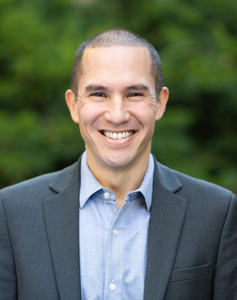
Dean of Faculty
Gunner is the Dean of Faculty at CCEF, where he has served since 2024. He holds a PhD in biblical theology from the Southern Baptist Theological Seminary and a master of theology and master of divinity from the Master’s Seminary. Prior to joining CCEF, Gunner served as a lead pastor for seven years, after working for fifteen years in Christian higher education as a resident director, director of student life, associate dean of men, and biblical counseling professor. Gunner has a passion for helping believers live consciously in the story Scripture tells, equipping the local church for interpersonal ministry, strengthening pastors, and biblical preaching and teaching. He has published the Psalms notes for The Grace and Truth Study Bible (Zondervan, 2021), What If I Don’t Feel Like Going to Church? (Crossway, 2020), and numerous essays and articles on the Psalms and adoption.
David Gunner Gundersen's Resources
Executive Director
Jonathan Holmes is the Executive Director of CCEF as well as the Founder Emeritus of Fieldstone Counseling, where he served for over nine years. He also previously served on the pastoral teams of Parkside Church and Parkside Green for fifteen years. Jonathan graduated from The Master’s University with degrees in biblical counseling and history and received his MA from Trinity Evangelical Divinity School. He is the author of and contributor to a number of books, including The Company We Keep, Counsel for Couples, Rescue Skills, Rescue Plan, and Grounded in Grace: Helping Kids Build Their Identity in Christ. Jonathan has written for Christianity Today, The Gospel Coalition, the Biblical Counseling Coalition, the ERLC, and CCEF’s Journal of Biblical Counseling. Jonathan serves on the Advisory Board for the Association of Biblical Counselors (ABC) and the Council Board for the Biblical Counseling Coalition (BCC). He is an instructor at Westminster Theological Seminary in the Master of Arts in Counseling program, and he speaks frequently at conferences and retreats. He and his wife, Jennifer, have four daughters.
Jonathan Holmes's Resources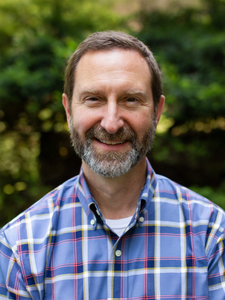
Faculty
Mike is a faculty member and counselor at CCEF, where he has served since 2001. He holds a doctor of medicine from the University of Pennsylvania and a master of divinity from Westminster Theological Seminary. Prior to joining CCEF, Mike worked as a family physician for eleven years. He has particular interests in working with ministry leaders and with those who struggle with anxiety, depression, and OCD. He has published numerous books, including CrossTalk (New Growth Press, 2009), Descriptions and Prescriptions (New Growth Press, 2017), and Saints, Sufferers, and Sinners (New Growth Press, 2021).
Mike Emlet's Resources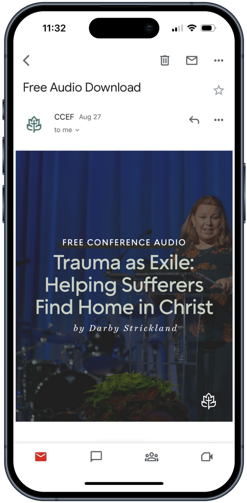
Sign up for our weekly email and receive access to a conference talk by Darby Strickland on helping trauma sufferers find home in Christ.
Loading form...