Christian Counseling & Educational Foundation
1803 East Willow Grove Avenue
Glenside, PA 19038

David Gunner GundersenEsther LiuJonathan Holmes
July 20, 2026
This is part 4 of a 7-part series. Listen to the other episodes below:
•
Our circumstances, emotions, and relationships all shape us, but they don't define us. At the center of who we are is something deeper: the heart.
In this fourth episode of our series exploring CCEF's seven distinctives, Gunner Gundersen is joined by Jonathan Holmes and Esther Liu to discuss what we mean when we say, "Our hearts are active." Together they explore how Scripture describes the heart as the center of our desires, fears, loves, worship, and choices. How does understanding the heart change the way we pursue personal growth, care for others, and participate in the life of the local church?
The conversation moves beyond behavior modification to consider how God meets us at the deepest level of who we are. Jonathan, Esther, and Gunner share personal stories of how this distinctive has shaped their own walks with Christ and explain why curiosity, humility, and hope are essential when helping others.
In this episode, you'll learn:
Mentioned in this episode:
00:00 Introduction & September Course Registration
01:11 Favorite Foods & Restaurants
04:56 Introducing Distinctive #4: "Our Hearts Are Active"
06:19 What Does the Heart Reveal About a Person?
10:47 The Heart, Agency, and Life's Circumstances
13:57 Why Our Hearts Are Always Active
17:37 Personal Stories of Learning About the Heart
29:01 Why This Matters for the Local Church
33:29 Final Encouragement
Hello, and welcome to our CCEF podcast, Where Life and Scripture Meet. My name is Gunner Gundersen and I get to serve as the Dean of Faculty here at CCEF. And before I introduce our guests for today and our topic, I'd love to share about an opportunity with you. How does Christ’s past, present, and future grace change how we live in our daily lives?
How does the Lord meet us in our suffering and our struggles with sin? These are just two of the questions that are addressed in our foundational course, Dynamics of Biblical Change. Registration for Dynamics and our other September courses is open, and you'll want to register before the prices increase on July 28th. You can learn more and register at ccef.org/school.
Well, today I'm really thankful to be joined by two of my friends and colleagues. The first is our executive director, Jonathan Holmes. Welcome back, Jonathan.
Thanks for having me.
And also by my colleague and fellow faculty member, Esther Liu. Hey, Esther.
Hi, everybody. Hi, Gunner.
Guys, before we dive into our next distinctive in this series, I did want to ask another very important question, as we sometimes ask. People are dying to know. They didn't even know they were dying to know until this moment. And that is, what is your top food, or food order, or restaurant.
Well, I mean, you've asked kind of three questions, so I'm going to give you answers to all three.
That’s the true “foodie” answer… “I have so many directions I can go with it.”
And I love to eat. So this is a perfect question to open this up. Gunner.
Top food: I mean, I love anything fried. So fried chicken, French fries. I mean, if it's deep fried, you have me. So that's an easy one.
Restaurant: I'd probably say if it's fast casual, probably Chick-Fil-A. My daughter works there. So if I can get the bonus of getting a good meal and then seeing her, that's a double blessing.
So in terms of order: I'm thinking again, a restaurant, it's got to be Korean food. Korean food is the best. So, a good sit down meal with all the bonchon dishes, all of the different stews and soups and meats. It’s… I feel like it's a foretaste of heaven, in many ways. Korean food is just delightful. It's so communal, but I love Korean food.
So Korean food is Heaven's appetizer.
It is, it is.
I have to piggyback off of that, Jonathan, because I just recently moved to Northern Virginia after getting married. I'm Taiwanese American, but my husband is Korean American. And so Northern Virginia, NOVA, is known to have really good Korean food. So, I would say my favorite food and restaurant has shifted over the years. Nothing constant, but currently it would be the Korean food in Northern Virginia.
In particular, I've been really into… I’m going to butcher it… but it's seolleongtang. They have a really good restaurant here that I crave regularly, and it's just a clean, white broth. There's thin meat, there's noodles, you add scallions to it. It's very healthy, but it's very hearty, brothy, just yeah, makes my tummy feel full and warm and happy. That would be me.
People are right now pausing this podcast and jumping onto DoorDash or heading out the door to grab things because of your descriptions. So thank you for losing us, listeners. I appreciate it, for both of you.
I'm going to go with family tradition here. My mom, Naomi Gundersen, my Japanese mom, has made these traditional egg rolls that I just love. And there are these pork egg rolls that are just filled with veggies and fried just perfectly. And they just represent not only the meal itself, but as you know, those meals can do so much else about family and other gatherings. And so my mom's egg rolls, those are the top. I, once, when I was a resident director overseeing a dorm of guys, my mom came and visited and her and my brother, who was also in town at the time, joined together and made 160 of these pretty girthy egg rolls and just invited whatever guys were present to come down. And they destroyed these egg rolls. And I think they were like, “What is this magic?”
Yes, yes, I think I remember that, Gunner Gundersen, because I know I've had your mom's egg rolls before, and I remember because Gunner’s brother Michael and I used to, to live together, I feel like I remember her being in our apartment, and that's just watching them wrap egg rolls like crazy. And they,yeah, I mean, they were so delicious. Absolutely delicious.
It's quite an operation. She will take it on the road and make them in other places. So that would not surprise me. Yeah.
It's amazing.
Well, today we are kind of at the center of our seven-part series on our distinctives. We're talking about distinctive number four of the seven. And as we've shared on the podcast in this series, each of these distinctives doesn't stand alone but is part of a larger, a larger, I guess, seven-course meal, if you will, to use the analogy.
But it is part of the same ecosystem that all really work together. So in light of that, before we dive into number four, I'd love for us to just read together these seven distinctives so that everyone can hear them together, and we too can be reminded of how they work together. So, Esther, would you like to kick us off?
Yes. So the first distinctive says, “The personal God gets personal with us.”
Number two, “Scripture comes from the mouth of God.”
Number three, “We are embodied souls shaped by a world of influences.”
Number four, “Our hearts are active.”
Number five, “Help and change follow a path, but not a script.”
Number six, “Care and counsel are pastoral and at home in the church.”
Number seven, “Biblical counseling engages with the voices around us.”
If you'd like to read those, but also the descriptions that go along with those, you can find them on our website at ccef.org/about.
Now, when we get to number four, “Our hearts are active,” here's the description of this, of this distinctive: “Amid the swarm of life's influences is the human heart, that is the soul made in God's image. We are both physical and spiritual. To know the heart is to know the person, and to know a person, you must know what he or she desires and loves.
The heart has depth and layers. Most apparent are our natural desires for love and meaningful work. These desires are either satisfied or thwarted. And there are our emotions: anger, fear, shame, love. All of these reveal what is important to us and there is more. Further in are our moral desires and conscience. Here we notice our movement toward right or wrong and the battle between the two.
These point to the very center of our lives where we face God or turn away from him. We are most fully human, and we grow progressively nearer to God when we listen to the words of the Father. Believe in the Son. Come to Christ because of the Spirit's work. Turn from sin and death, and live in faith, hope, love, and wisdom.
So as you hear that reread, guys, how might you want to unpack that a little? Just what stands out, first of all, to you about the description as you think on it?
One of the things that stands out to me is in that first paragraph that you read, Gunner, of, you know, knowing the heart: to know the heart really is to know the person, and to know a person, you must know what he or she desires and loves. And I think about the most important person in my life, you know, my wife.
There's one thing about knowing “about” a person, right? Knowing things about them. Knowing what their job is, their vocation, favorite foods, even. But there's something that you want more of, right? I think all of us, as people and as counselors, we realize there's more to us than just what we do, or how we show up. Relationships begin to get richer when we know these things that are going on below the surface:
What do you desire? What do you love? What animates you? What makes you nervous? What makes you scared? Right, those things, and I feel like that's what this description is beginning to capture. And I think it's a lot of what drives so much of our ministry here at CCEF is we want to know people in that way. We want to really know what motivates and spurs them on as human beings.
Yeah. To what you said, Jonathan, that stuck out to me too, in the sense of, it evokes curiosity, and it raises the priority of curiosity in ministry; and fruitful ministry and fruitful relationship is the sense of wanting to know and better understand a person and not just reducing them to, yeah, easily observable attributes or traits, but to really want to know what gets them ticking, and what they care about, and what they desire, but also what they fear, what they're preoccupied with, what they're worried about. And that just invites a lot of questions, loving questions to get to know someone, and that’s being a form of loving someone.
I really appreciate the first sentence that just says amid the swarm of life's influences is the human heart. That is the soul. And maybe that strikes me today, because I think it can be tempting for me to identify myself primarily by the influences that maybe surround me or that swirl the circumstances I'm in, the things that I'm facing.
But I'm so grateful to know that the Lord engages me at the very core of who I am, and that there is this central component of who I am that God has given me in the human heart. That is so crucial. And to know that that's where he is fundamentally at work, redeeming and working, and that that flows out into the rest of my life it's encouraging in a way that it's not just that I'm living amidst this swarm, this whirlpool, this sometimes tornado of things, that are happening. But there is a me that the Lord loves and is caring for and sanctifying.
Yeah, I think that it is a helpful image because if you are just being tossed around by various influences and things that swarm around you, you really don't have any agency. You know, you don't have any will. You're kind of just battered back and forth. And I think that is something that our culture misses out on, right? Our culture, which, you know, can be more humanistically or naturalistically, driven, a bit more ignorant to what is going on in the interior.
You know, human beings are just kind of products of their environment. They're they're just a mass of brain cells, body tissue, bones, etc., and in some ways that it leads to, I think, a dehumanizing way of interacting with each other and with people, if that's all we see, you know, if we’re just kind of these things being swarmed around by influences, environment, and things of that nature.
So, yeah, I resonate with that too, Gunner, of yeah, there's something there. You're there. Right. You're there in the midst of all that.
So yeah, you use the word agency, Jonathan. And the word that comes to my mind, as you say that—there's something empowering about realizing that there's a heart in the midst of all these circumstances. There's so much in life that we can't control. There's so much noise in our life that is uncontrollable. And we can then… I can then… be tempted to believe, like “I'm just a victim of these realities that I can't change, that I can't alter, that I can't influence, even if I may want to.”
And yet this distinctive of, “Our hearts are active,” like you guys have been saying, it clarifies that there is agency and empowerment, even in the midst of potential circumstances that I'm embedded in that I can't change. There's still a movement that I can take. There's still a turning to God, away from God that can happen regardless of if circumstances change or not, if the outcomes of life are favorable or not, all of those become contexts in which my heart then has an invitation to respond accordingly. And there's something empowering about that.
Yeah. Yeah, absolutely. I love that word empowerment. Because yeah, we are in a world where so much can feel out of control and outside of our reach. But the ability, like you said Esther, to be able to turn towards the Lord. Right. A movement of the heart, a movement of the heart's allegiances, a movement of the heart’s worship.
We can do that even if we're just even moving in that direction. That is a movement of faith that we want to celebrate. And I actually think, again, in our counseling and even in our own personal lives, that's really hope-giving to know that we have that ability in good times and bad times and hard times because of our active heart, we have that agency and that ability to be able to respond to a personal God who created us and who meets us in the midst of all of those things.
Could we talk for a minute about this word “active” and the idea that our hearts are active? There's a clear sense in which this distinctive is not just saying, “Here is this reality, the heart. And here are some of the ways that it can work.” But the distinctive is clearly leaning into this idea: our hearts are active and our hearts are consistently, constantly active.
There's a sense in which our hearts are this factory of desires, a factory of hopes, aspirations, fears, concerns, things that we both are inclined to, or things that we're kind of inclined away from and we’re averse to. Can you talk a little bit about this idea that our hearts are active and why that understanding is important?
Jonathan kind of started with this in his previous comment of just that movement towards, and I really appreciate the third paragraph of the distinctive because there are so many verbs in that third paragraph. The verb… our movement toward right or wrong. And then it goes into where we face God or turn away from him. Those are very active terms.
We're either facing towards God or were turning away from him. Even the next sentence it says, “We grow progressively nearer to God.” Then it says, “Listen.” “When we listen to the words of the Father, believe in the Son, come to Christ because of the Spirit's work. Turn from sin and death. Live in faith, hope, love, and wisdom.” I feel like those verbs are intentional because those are all things that our hearts are doing.
They’re decision points, they’re forks in the road of what are we going to do here? What are we going to do today? In this moment? Will we turn towards God? Will we turn away from him? Will we listen? Or will we choose to not listen? Will we choose to, yeah, believe? There's just so much “activeness” to it. It's not just this static thing that's passively being acted upon, but there are all these choice points in our everyday lives that I think “our hearts are active” accurately captures.
Yeah, I think it's a great observation. You know, just noticing how all of those active verbs kind of come into full view there in that third paragraph. It reminds me I was on a writing project, and one of the topics was the heart, and one of my friends who was helping me do a little bit of research, he said, “Hey, I'm just going to start in Genesis, go all the way through the Old Testament: Anytime it talks about what the heart can do. You know, I just want to start taking notice of that, of the heart can turn, the heart can love, the heart can worship. And it's amazing when you go into Scripture just how active the heart is. It's really the central part of who we are as human beings. I think I see that most prevalently in my own family, especially around the dinner table, having four daughters at various ages, just the sheer amount of activity at every end of an emotional spectrum, it is.
It is amazing to see. I mean, there can be tears, laughing, there can be heartache, there can be joy, there can be doubt, fear, anxiety. I mean, you know, in a 45-minute dinner table at the Holmes home you can get literally every activity. I think of the heart and it's a wonderful thing to see.
There's so much texture to it. There's not a flatness to it. And again, Scripture, Scripture tells us about that. It shows it to us and not just propositional form, but in how people respond and react to one another, other circumstances, and primarily to the Lord himself.
Jonathan, I think that takes us in a really important direction in terms of how this works itself out in our lives, our families, our relationships, our ministries. Could we talk a little bit about how this does work this way? This distinctive, is really active in kind of the “living rooms” of our lives and the everyday moments of our lives.
Maybe could we look back on our own development and just identify places where we became aware, or more aware, of the heart's importance? How has that developed for each of us? I'm happy to share a couple of things that have just come to mind.
I think at the point of my conversion at 16, I had grown up in a home where the Bible was taught and the gospel was presented. I had not taken those steps, those verbs that you just highlighted, Esther, of listening, and truly hearing, and coming, and believing, and turning, and living. But when I did, it's because I realized, especially later on, as I looked back, the Spirit simply convicted me not of particular outer behaviors, but of the condition of my heart. And I started to see that even the apparently good looking things that I might do, I was doing for other people to see, and I had this deep concern for what other people thought about me.
And that led to, for me, an interesting conversion process, because, over about six months, I really had this actual sense of desperation and helplessness because I was realizing I don't have right now some particular red letter cardinal sin that I can say “If I stop doing this on the weekends or stop doing this over here, then I will be better.”
I could tell that the problem was deep within me at the core of my desires. And so that's where I needed the redemption to be applied. And it really put me in a place of recognition of my need for God to work through the work of his Son on the cross applied to me and the Spirit to work, work in me, to change me.
And I'm really grateful for that. And then early on, I just got into a pretty discipleship-rich environment that had a heart orientation. And so we were consistently having conversations about the desires of our hearts, and our fears, and our concerns, and our hopes, and how those things fleshed out then in our behavior and our responses and relationships.
And that was a really crucial time for some of those foundations and frameworks to start to develop. Little did I know that there is so much deeper to go into this, which has been now a lifetime journey that only continues, and there are still things that just seem like massive layers of new insight that the Lord keeps teaching me. Though I could have said the main categories he was graciously showing me early on, and it's such a revelation continually about how active my heart really is.
Yeah, I mean, I can think of, man, I can think of especially my own heart being revealed and just, you know, relationships with friends, and with Jen and the kids. And I think that, I don't know, probably just even within the past 5 to 10 years, especially realizing that a lot of these external struggles that I have weaknesses, just sin patterns that just hang on, whether it's my impatience, my irritability, my anger, how that can seep out is actually tied to something that's going on in my heart.
And, you know, you can try different, you know, anger management strategies. Count to ten or, you know, go scream in a pillow or something of that sort, but you realize all of that can bypass the heart. And, you know, the heart work that has been needed on my end is, you know, like you were saying, Gunner, like just going face to face with the Lord and looking at some of those behaviors and drawing a little bit of a dotted line back to what's going on underneath the surface.
Well, you know, I like control. And when things are out of control, like, I get frustrated, or when things don't go my way, or when I think I have a good idea and it's rejected, you know, how do I respond to that? And, you know, those are all questions at the heart. I think that's where a lot of the writings and teaching from people like Paul Tripp, and Ed Welch, and Powlison, and Tim Keller, and others have been so helpful to me, along with Scripture, to help me see my heart better, to help me understand, “Oh, there's there's something bubbling up underneath the surface under these behaviors that you need to understand, that you need to bring before the Lord.” And so this, this distinctive of ours, of the heart is active, is I mean, this is real life in so many ways for us, for sure.
Both of you have kind of talked about, kind of the externality of a life, the outward behaviors, what's happening on the outside that people can see. And I would say this distinctive maps on in a similar way to me too, of just, you know, not growing up as a Christian, becoming a Christian in college, and having kind of that earnest zeal as a new Christian of, “I want to eradicate all the sin in my life. I want to live a life that's pleasing to the Lord and just, I'm on fire.” And yet quickly being confronted with different areas of life that I could see, “Oh, I shouldn't be doing that. Oh, I shouldn't be doing that.” And I think my first approach to that was a form of approaching sanctification as primarily behavioral modification. And so I would see this external behavior and be like, “Oh, I gotta kill that.”
I'd see this over here, this people pleasing here, and I'd be like, “Oh, I need to swat that away.” And was kind of fighting sin in that way, just trying to modify my behavior. And it took, you know, various teachings, including CCEF, to realize this distinctive is at play. And what it did was change my conversations with God and my wrestling with sin with God, because what originally was primarily, “God,please take the sin away. Please help me not do this anymore. Please take the struggle away. I don't want to struggle with this anymore. I want to overcome this.” That sentiment was still there, but once I realized that the heart is active, and once I could dig deeper into why I was doing some of the things that I was doing, being able to start to locate some of the desires that were driving that for me.
It was a lot of realizing that a lot of fear that was driving that. How often so many of these things that I was doing behaviorally, relationally were because of something inside of me that was saying, “I'm afraid, and this is my way of protecting what I am afraid… protecting myself from things that I'm afraid of,” that transformed my conversations with the Lord.
Because then it wasn't just “God, take this in away from me. Help me not do this thing anymore.” But it became a, “God, I am scared, and I need you to protect me. I need you to provide for me. I need you to be who you promise to be. And I'm scared that you won't. And so I'm doing all of these things to try to create my own self-protective world. And it's not working. And I don't want this, so I need your help. I need you to remind me that you're my refuge. I need to be reminded that you're my protector.”
And that was such a… it's an ongoing thing. But there were, there have been certain meaningful turning points where I realized that. And that's just enriched my relationship with the Lord: to realize that sin and growing from sin is way more than “just stop doing it.” But it's actually a God who enters in, then, and comforts, and reassures, and speaks to me through his promises, and protects me, and provides for me, and sustains me, and redeems me. So I just really appreciate how the teaching of this distinctive has deepened my relationship and my conversations with God.
I love that word “conversation,” because I resonate with that, and I think that's what we see in Scripture, right? I think about David in Psalm 139 where he says, “Search me and try me. Oh God, know, my inward ways. And in Psalm 19 the psalmist says, you know, “Declare me innocent from hidden faults and presumptuous sins,” meaning there are these things that go on in our hearts that that we don't even know, right?
Our hearts have complexities, and depths, and layers, and valleys, and labyrinths to them. That can be hard for us as human beings to discern. So being covenantal beings who live in relationship with the Lord, it shouldn't surprise us that to know this act of heart, we go to the Lord and we say some of those things that you said, Esther, of “God, what's going on? Help me. I'm seeing this external behavior, and I just, I don't know what's going on. Would you reveal this to me? Would you show me? Would you convict me?”
And, you know, even this morning I've been reading through Proverbs, or Proverbs is up in my devotional, and in Proverbs 16:2 it says, “All a person's ways seem right to him, but the Lord weighs motives.”
And yeah, I mean, there are things that go on in the interior of our life that are unseen and unknown to us, and we need the Lord. We need the Lord's help. We need his, really his mercy, to help us see ourselves as he sees us. And yeah, I think you're right, Esther, that's what the impact of this distinctive is… why it's so important for us in relationship to God and to others.
I think it really amplifies my understanding of the grace of God in my life. When I see how his grace is, is aimed at my heart. Of course, he's at work expansively throughout the world, but when it comes to me individually, he's deeply at work in my heart. And he's patient and he's gracious. He's all-seeing. And in the midst of his all-seeing eye he loves, and through Christ he accepts and he welcomes. And I think that has just become more and more humbling to me over my life. When I see how the Lord sees everything and he cares about my soul, he cares about my desires, my affections, and he sees every day how they stray. He already knew and he stays with me.
It's very humbling. I think the other thing I found is that it, in a way, is very equalizing as well, that the external expressions for all of us of our sins, our responses to the Lord, and our world, and our circumstances can look different depending on where we're at in our personalities and choices we make. And yet the same activities in our hearts are very shared in terms of the fundamental features of what is going on and what is moving around there. And I think that has been so helpful as I think about relating to other people in ministry, that we are so much more alike than we are different when it comes to our hearts being active.
Guys, when we think about this distinctive. Can we talk for just a moment here in conclusion about why this matters for our local churches? As we know, the second part of our mission statement is “Restoring counseling to the local church,” even as we seek to restore Christ to counseling. How does a biblical understanding of the heart, you know, foster spiritual health and growth in a local church? How does a biblical grasp of the heart, as that continues to mature in a church community, affect the way those relationships take place and affect the very health of that body?
Yeah, that's a good question. I don't know, maybe this is a way that I'm thinking about this distinctive with the local church that, I don't know, is resonating with me in particular is, you know, one of the things is when I come in to church on a Sunday and I see people, I'm only seeing part of them.
Right. There's more that's going on below the surface. And that leads me to curiosity. Hopefully. It hopefully leads me to a greater depth of relationship. Hopefully it leads me to more than just being willing to say, “Hey, how are you doing? How is your weekend?” Fine. Good. Let's go sit down. If I really believe our hearts are active, in that, to know people is to know their heart, right?
When I come to church on a Sunday, I want to find one person and I want to go. I want to go more than just skin-deep, right? I want to actually get to the core of, “Hey, what was hard for you, what was frustrating for you this week? What has made you happy, what has been received as blessing in your life?”
And I know on many given Sundays I don't do that. I fail in that. I can just keep it on the surface level and prioritize my own comfort and security and just, ease. But when I think about active hearts in the local church, this really encourages me to press in to know people in that way on a Sunday and not just be satisfied with kind of a skin-deep, superficial Christianity that I think, you know, for a lot of us in our churches that that might just kind of be the prevailing mood of the day, you know, depending on where we're at or how we're feeling about a given moment. So I think in many ways this kind of propels us towards really robust interpersonal ministry.
Yeah. Jonathan, you're starting to hit at kind of the ways that it could change conversations that take place in the local church and the way they take place. And I'm thinking along similar lines of, this distinctive helps, even our helping conversations when we're in conversations of people who are sharing their struggles, who are sharing what they're going through and they're looking for help, and the ways that we can say more than just, oh, yeah, that's, that's sin.
And you should stop doing that. It changes the conversations to, we ask more questions, we slow down. We're not quick to just go to that quick proof text that addresses that particular sin struggle that they mentioned. It helps us to take our time in getting to know them to the point where we can know them better, and we can speak a good word to them that we wouldn't be able to speak to them if we did not know them more intimately and get to know their hearts more deeply.
And so I just think of all the conversations, helping conversations that we might be having, whether it be in the church and informal/ formal contexts, the ways that this distinctive changes those conversations and also increases our humility in those conversations to slow down, ask more questions, and be curious.
Reminds me of how a healthy, growing local church is the ideal ecosystem to care for one another's hearts and to share our hearts together. Because of the diversity of interactions we're able to have and the ways that God has instituted aspects of church life, from preaching, to the sacraments, to prayer, to fellowship, to gifted service, both giving and receiving, to the mutual support that comes, the weeping with those who weep, the rejoicing with those who rejoice, and the day in, day out opportunity to live in those communities that allow us to see one another's hearts, share our hearts with one another, and engage in that mutual encouragement that is unique to a healthy church.
Well, this has been our fourth distinctive: “Our hearts are active.” Thank you both for joining in on this conversation. I always feel like we end these with so much more we could talk about, but we leave this to you who are listening to explore as we continue to explore it, and be explored by the Lord as he loves us, and he works his light into the different caverns of our hearts and continually brings us to face Christ with joy more and more.
Again, thank you and thank you for listening to this fourth distinctive from CCEF.
Dean of Faculty
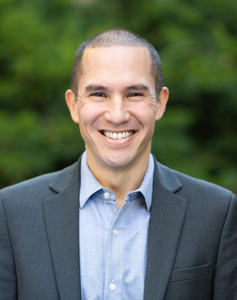
Gunner is the Dean of Faculty at CCEF, where he has served since 2024. He holds a PhD in biblical theology from the Southern Baptist Theological Seminary and a master of theology and master of divinity from the Master’s Seminary. Prior to joining CCEF, Gunner served as a lead pastor for seven years, after working for fifteen years in Christian higher education as a resident director, director of student life, associate dean of men, and biblical counseling professor. Gunner has a passion for helping believers live consciously in the story Scripture tells, equipping the local church for interpersonal ministry, strengthening pastors, and biblical preaching and teaching. He has published the Psalms notes for The Grace and Truth Study Bible (Zondervan, 2021), What If I Don’t Feel Like Going to Church? (Crossway, 2020), and numerous essays and articles on the Psalms and adoption.
David Gunner Gundersen's Resources
Faculty
Esther is a faculty member and counselor at CCEF. She has a master of arts in religion with an emphasis in biblical studies from Westminster Theological Seminary, as well as a master of arts in counseling. Since joining CCEF in 2015, Esther has served various roles, including as a counseling intern, the executive and faculty assistant, and a content editor. Esther has a passion for bringing biblical reframing to a person’s struggles and also holds deep concern for the importance of attending to multicultural aspects of counseling. She is the author of Shame: Being Known & Loved (P&R Publishing, 2022).
Esther Liu's Resources
Executive Director
Jonathan Holmes is the Executive Director of CCEF as well as the Founder Emeritus of Fieldstone Counseling, where he served for over nine years. He also previously served on the pastoral teams of Parkside Church and Parkside Green for fifteen years. Jonathan graduated from The Master’s University with degrees in biblical counseling and history and received his MA from Trinity Evangelical Divinity School. He is the author of and contributor to a number of books, including The Company We Keep, Counsel for Couples, Rescue Skills, Rescue Plan, and Grounded in Grace: Helping Kids Build Their Identity in Christ. Jonathan has written for Christianity Today, The Gospel Coalition, the Biblical Counseling Coalition, the ERLC, and CCEF’s Journal of Biblical Counseling. Jonathan serves on the Advisory Board for the Association of Biblical Counselors (ABC) and the Council Board for the Biblical Counseling Coalition (BCC). He is an instructor at Westminster Theological Seminary in the Master of Arts in Counseling program, and he speaks frequently at conferences and retreats. He and his wife, Jennifer, have four daughters.
Jonathan Holmes's Resources
Sign up for our weekly email and receive access to a conference talk by Darby Strickland on helping trauma sufferers find home in Christ.
Loading form...