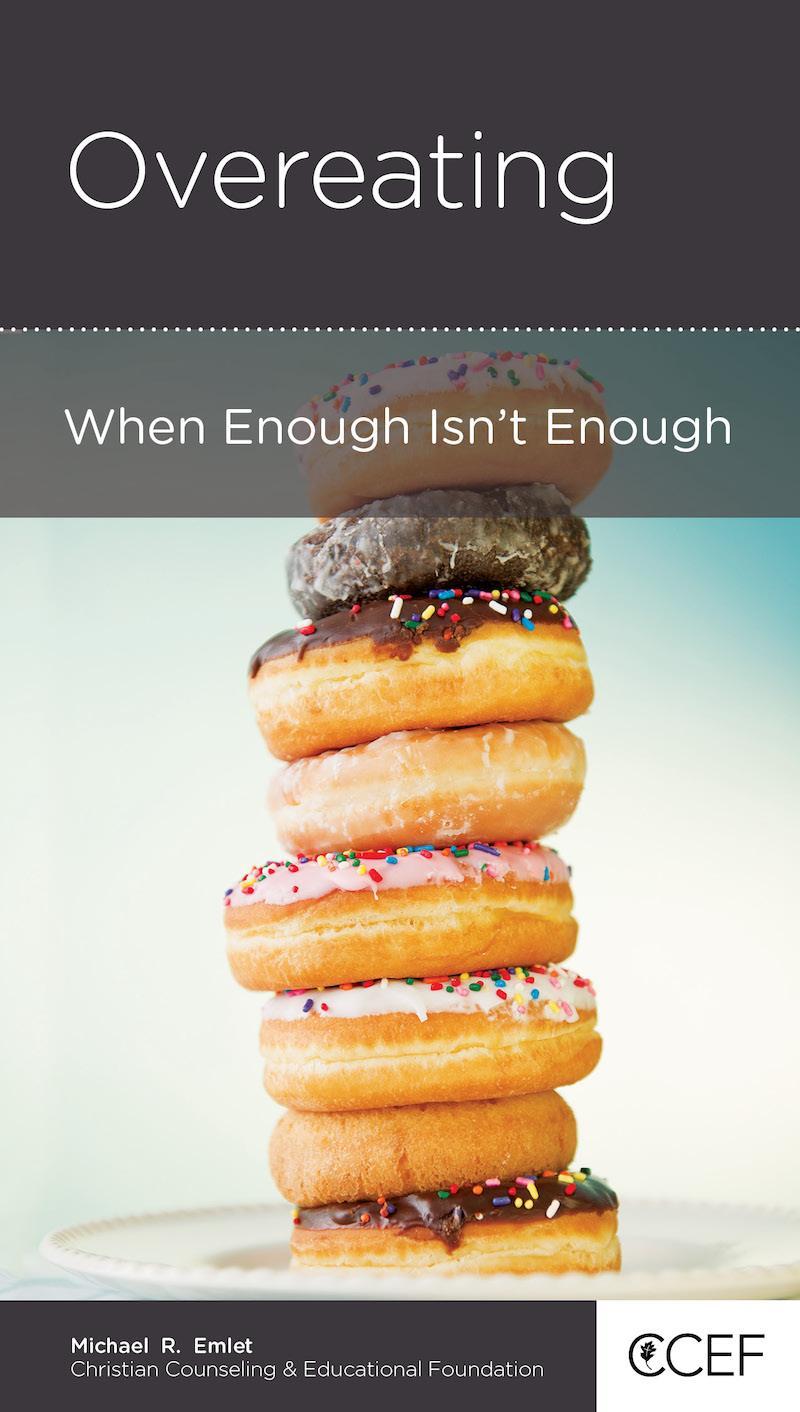
For more on this topic, see Mike Emlet's minibook, Overeating: When Enough Isn't Enough.
Transcript
My focus in answering this question won’t be on the disordered eating patterns characteristic of bulimia or binge eating. Rather, my aim is to help those who overeat at mealtimes and who find this to be a consistent pattern in their lives. First of all, it’s important to understand why you overeat. While there may be many factors contributing to your tendency to overeat, I want us to see that overeating is not simply a behavioral or bodily issue but one that stems from our hearts, the moral center of our lives.
What are some of the heart-oriented reasons we overeat? First, pleasure. Sometimes we overeat because we just don’t want the wonderful multisensory experience of eating to end. It’s absolutely right to enjoy our food. God gave us taste buds, after all. But sometimes pleasure becomes an end in itself so that we continue eating well beyond the satisfaction of our hunger.
A second reason we may overeat is pain. Sometimes we overeat in response to negative emotions such as anxiety, sadness, guilt, or shame. For a brief moment, we escape the negative feelings through the comfort and pleasure and self-soothing afforded by food.
A third reason we may overeat is to reward ourselves for good behavior. Sometimes we come to a meal with a sense of entitlement: “I deserve to eat more at this meal since I washed myself earlier today” or “I endured a hard day of work so I can indulge myself a bit.”
Well, in each of these reasons, we see that food becomes something disconnected from the Giver of the good gift. If we want to change patterns of overeating in our lives, we need attitudes about food and eating reshaped and renewed by Scripture. So what does the Bible say about food? Well, a lot. You can’t read the Bible without encountering references to food, meals, feasts, and fasting. Food is a central theme in Scripture and is connected to the relationship between God and his people. The centrality of food in God’s relationship with people doesn’t mean that food is involved in our actual salvation, but it does mean that our use of food is not morally neutral. When we eat, we want to do it with a Godward orientation and motivation. In essence, our use of food is an expression of our worship.
So what are some biblical themes regarding food that can provide a framework to guide you in your struggle with overeating? Let me suggest three categories. First, food as gift. The provision of food is one way God shows his fatherly care. So we want to steward his gift well by the way we eat.
Second, food as sacrament. And here I’m not thinking of the term sacrament in the formal way we understand baptism and the Lord’s Supper, but rather sacrament in an informal sense, that is, food as a sign pointing beyond itself. Food is a physical reality that points to spiritual realities having to do with our relationship with God, both now and in the future. Viewing food sacramentally should encourage you to experience a meal not simply as an endpoint in itself, but as a stepping stone toward the God who loves you.
And then third, food as fellowship. Here we see food as a connecting point between God and his people throughout Scripture, but we also see that food draws us closer to one another. The Bible’s emphasis on hospitality and table fellowship shows that food is meant to be a connecting point between people as well.
These biblical perspectives on food provide the reason and motivation to fight against a pattern of overeating. Without them, the battle can simply become an individual’s exertion of willpower, which can so easily turn legalistic and self-absorbed. So what are some practical steps in fighting against patterns of overeating?
Well, before eating, evaluate why you’re most likely to overeat based on the reasons I mentioned earlier. What, for you, are the main contributors to your overeating? Being aware helps you be more spiritually alert as you sit down to eat. What else? Assess your emotional state prior to eating. This is especially important if negative emotions tend to fuel your eating. If that’s the case, take those emotions to the Lord before you eat and pray that you would taste and see that he is good. And when possible, eat with other people. I’m more prone to overeat when I eat alone, and I realize this is a harder challenge for singles who live alone, and that may require some pre-planning. And then lastly, make your overeating a regular prayer concern.
What about steps during eating? Well, eat regularly, because eating regularly helps you to prevent a swing from ravenous hunger to uncontrolled eating. Don’t eat in front of a screen. This is why meals or snacking in front of your computer or TV can get out of hand. Your favorite show becomes the main attraction, and eating becomes a mindless tagalong. Give thanks before and after you eat. That keeps the meal centered on the Lord. And slow down and savor the flavors of the meal. That helps you be a deliberate eater who is mindful of the Lord, the true source of pleasure. Drink plenty of water, which keeps your hydration adequate and contributes to expanding your stomach. And then finally, pay attention to how full you feel. Eating slowly helps you keep pace with your body’s cues regarding hunger and fullness.
What should you do when you overeat anyhow? Remember that righteousness is not measured by calorie counts. Your acceptance and identity are in Jesus Christ, so turn to him and away from guilt and shame. Avoid an all-or-nothing mentality. God’s mercy meets you now and readies you for the next meal.