Christian Counseling & Educational Foundation
1803 East Willow Grove Avenue
Glenside, PA 19038

David Gunner GundersenMike Emlet
March 2, 2026
This is part 1 of a 2-part series. Listen to part 2 here.
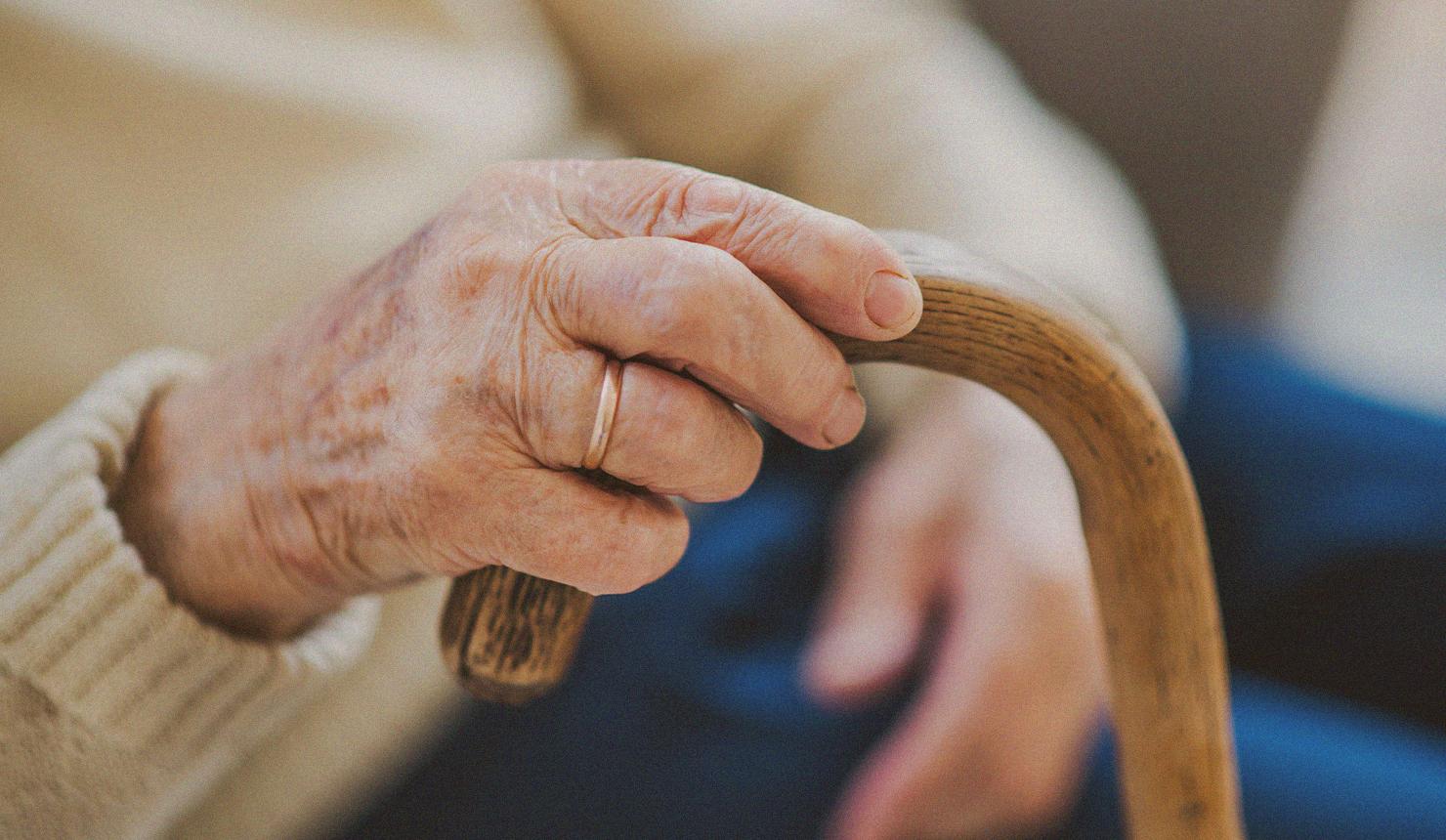
In this episode, host Gunner Gundersen sits down with Mike Emlet to reflect on his recent experience caring for his aging mother during the final years of her life. Mike shares about his mom, “Mim”—her vibrant faith, her lifelong commitment to the local church, her sense of humor, and her remarkable ministry of handwritten letters. He also opens up about the gradual onset of cognitive decline, the impact of dementia and stroke, and the practical and emotional realities of caregiving. Mike and Gunner discuss the weight and the sweetness of walking closely with a loved one through suffering and decline. There is beauty and cost, and Jesus is in the midst of it.
Mentioned in this episode: Receive 6 conference sessions on conflict and unity. Sign up here.
00:00 Introduction
01:18 Mike Emlet's Background
3:13 Miriam "Mim" Emlet
08:43 The Need for Focused Care
21:33 Caring for Mim in Their Home
25:04 The Need for Community Support
28:30 The Hardest and Sweetest Parts of Caregiving
30:41 Closing Thoughts and Encouragement
Hello and welcome to our CCEF podcast, Where Life and Scripture Meet. Thank you for joining us today. My name is Gunner Gunderson and I have the privilege of serving as the Dean of Faculty here at the Christian Counseling and Educational Foundation. And I'm really grateful for the conversation that I'm about to get to have with you and our friend today, who I'll introduce in a moment. Before I do, I just want to mention that we have do have a free audio giveaway. We are happy to be giving away some audio on the topics of conflict and unity. And what you can download is six conference sessions by CCEF faculty, Aaron Sironi and Darby Strickland, along with a few other speakers. And if you'd like to access that, just head to the link in the show notes and enter your email and you'll receive a download link where you can access these free audio resources and we trust that they will be helpful to you. Well, today I'm gonna be having a conversation with one of our CCEF faculty about their recent experience in caring for an aging parent. And so I'm really excited to welcome to the podcast, Dr. Michael Emlet. Mike, thank you so much for joining us.
Thanks, Gunner. I'm excited to be here.
As we get started, I just wanted to see if you could introduce our audience to yourself a little bit, just your background and your time at CCEF thus far.
Sure. Well, I've been at CCEF as a faculty member and counselor since September of 2001. Before that, I trained as a family physician. So I was in practice first for six years in South Carolina before moving up to start seminary at Westminster.
And when I graduated in 2001, that's when I came on board with CCEF. I've been married to Jody for 28 years. And we have two adult children and two grandchildren as of last year.
That's wonderful. Thanks for sharing, Mike. Hey, one of the things we've learned as a faculty recently in one of our faculty prayer times, I asked everybody if they would share their middle name. And I feel like you really know someone just a bit better when you know their middle name. And you know, people who know you as the author, Mike Emlet, know that your middle initial is R. Are you willing to share here publicly on the podcast what that stands for?
Absolutely. It's Ray, R-A-Y, which was my grandfather's and my father's middle name as well.
Mmm, grandfather's and father's middle name. So Michael Ray Emlet. Thanks so much for joining us. As many of our audience will know, as Mike is a beloved CCEF faculty member, Mike is the author of several books: Cross Talk: Where Life and Scripture Meet, Saints, Sufferers, and Sinners: Loving Others as God Loves Us, and Descriptions and Prescriptions: A Biblical Perspective on Psychiatric Diagnoses and Medications, along with a number of mini books, many Journal of Biblical Counseling articles, and many other resources in a variety of formats. So we're very, very grateful, Mike, for what you've contributed and continue to give to the church through CCEF.
Thanks Gunner.
Hey Mike, as we get started, can you just start by talking a little bit about your mom and tell us a little bit about her: where she's from, and what she was like.
Yeah, absolutely. It's a privilege to do it. So my mom is named Miriam, Miriam Emlet. She goes, or, she went by “Mim.” Even to her last days, if someone called her Miriam, she kind of look at them with a bit of a scowl and say, “It's Mim.” So she always went by Mim. She was born February 13th, 1934. And she passed into glory, April 22, 2025. She was born in a small town in South Central Pennsylvania, and married my dad, Marvin, in 1960. And they had 47 years of marriage before my dad passed in 2018.
Mike, what are just some of the things that you kind of remember most about your mom, some of the things that you appreciate before we talk a little bit about some of the caregiving journey that developed?
Well, certainly her faith was absolutely central and her commitment to the local church body. I mean, her faith blossomed over the course of her life. When we would visit my parents, they would spend time each morning reading Scripture and praying together, and then they would read Scripture separately. My mom just had this very hope-filled optimistic view of life because of her relationship with the Lord. It is lovely to hear her pray. Her prayers were very personal. Late in life, as her cognitive faculties declined, and her physical frailties increased, she became less verbal, but she would so often say, “I love you, Jesus,” or “Thank you, Jesus,” or give a hearty “Yes!” when I was praying with her. So I think her faith was very clear, her commitment to the local church body…so they were members of an evangelical Lutheran church. That's the church that I grew up in. And she sang in the choir from 1960 when she joined that church when she married my dad. That was his home church and her family's church. Until she was 89, she sang alto in the choir. So I think that those were her faith and her commitment to the local church body. I think also her sense of humor was something that always stood out to me. When I took my then girlfriend, Jody, to meet my parents for the first time, my mom took Jody aside and said, if he doesn't marry you, we'll adopt you. So she had quite a sense of humor. And even after, we'll talk later about her stroke and cognitive decline, but even later, her sense of humor was really obvious. And then maybe one other thing: she just had a ministry of letter writing and of notes and cards to people over the years, hundreds and hundreds of cards and notes that she sent to people over the years, birthday cards, anniversary, Christmas, just notes of encouragement. Long after I had lost track with some roommates, college roommates, for example, they would be getting cards, birthday cards from my mom. She just had this way of, though the geographical distance was far, “Hey, I'm thinking about you and I'm just wanting to write to you to encourage you.” And so that was, yeah, that was something that really stood out to me, particularly in our digital age. She had a pen pal from the UK that she had since age 11. So they had an 80 year correspondence.
Wow, 80 years of physical letter writing.
Physical letter writing, yes.
That's beautiful, Mike. It's just wonderful to hear you talk about your mom, and it's been sweet in the last year and a half for me to just get to know her a little bit through you and to hear some of these stories and the legacy that you've inherited, both you and Jody and your kids and now grandkids as you have been able to watch and at the very end to watch very up close her life in many ways. Mike, can you talk just a little bit about maybe when you started realizing that your mom might need some focused care, and how did you end up coming to decisions that you came to?
Yeah. Well, my father died in 2018, April of 2018. And at that point, my sister, my only sister, my only sibling, had been living with my mom and dad for her life. So she stayed living in the house with my mom. And they lived about two and a half hours or so from us. But the first time I realized that, oh, there was at least issues that we needed to address was Christmas time around 2021. My mom would often talk about receiving so many pieces of mail each day, sometimes between 40 and 60 pieces of mail, and it became just burdensome to her and she couldn't understand why she was getting so much, but that seemed to be taking up just so much time in her life. And when I went up to pick up my sister and mother for Christmas that year to bring them to Philly to spend Christmas with us, I really believe it was the Spirit speaking: “Take a look at her checkbook” was what I felt. And so I did, and to my dismay, I saw that she had been just writing so many different checks to charities, political action committees, sometimes the same organization in the same day, twice in the same day, because she would get two different pieces of mail from that particular organization. To her, it was a different appeal. So that was really concerning. And probably the first time you know, my sister and I had to have a hard conversation with her. At that point, I took over her finances, and my sister kept her checkbooks and would dole out, you know, checks as she needed. So she would still continue to write out checks for certain things. So we wanted her to maintain as much oversight and independence as she could. But at the same time, there were tens of thousands of dollars that she had given away. And so we were trying to protect her from that. But it was very hard for her, I think. I know it was hard for her. She remarked on it a number of times. So that was probably the first time, it was like, “Okay, there's cognitive decline that's happening.” Eventually, she would later be diagnosed with a mixed dementia. So an Alzheimer's-type dementia along with a vascular dementia with the small blood vessels in her brain being impacted. So those were some of the early signs of that.
Mike, as you're observing this and working through this, obviously you're her son, you love her, you have all these experiences and memories, this affection. You're also now moving into a time of really needing to be discerning about potential care, which is another step and expression of that relationship. At the same time, you also are trained as a family physician. So as you're starting to watch these things, get diagnoses, what were some of the impacts for you as you're watching this? Because you would just have a better understanding of some of these things than maybe your average person as they think about a parent, as they think about some of the diagnoses they're hearing about, some of the uncertainties about the future. How did that experience maybe affect your journey there?
Yeah, mean, in terms of the actual formal diagnosis of dementia, that happened later when she came to live with us, which we can talk about as well. But I think for me, the challenge was she's two and a half hours away. She also had some falls over the course of a year, year and a half. So trying to coordinate care from a distance, I think, was really challenging. Thankfully, we had a very involved neighbor. Her church was very involved. I think in retrospect, I would have probably been more proactive in having contact with her family physician. I think that probably could have been helpful to have more direct contact with him. But I think that some of the other more substantial medical things happened later. So early on, it was more this sense of how involved can I and should I be from a distance?
Yeah. And Mike, was there a certain tipping point, trigger point when you all had to come to a decision and how did you come to that decision for at least that stage of her care?
Yeah. Yeah. So the tipping point really happened in June of 2023 when she suffered a stroke. It was a stroke in the portion of the brain called the cerebellum, which kind of is the balance center of the brain. And what happened was that she fell, and so was then transported to the emergency room. And as part of that evaluation, it was found that she had this stroke.
So it didn't affect her speech, it didn't affect her arm and leg movement. She was just more tottery. And so she was in the hospital and then went to rehab after that. But it was really clear that she would not be able to, that she needed much greater oversight at that point when she was discharged from the rehab facility in July of 2023. So what my wife, Jody and I felt, yeah, led, called to do was to provide care for her in her home. So the way it worked was that Jody and I would alternate weeks. So Jody would spend a week in Central PA while I would be here in Philly. And then we would swap those roles. Yeah, we joked that we would basically wave at each other as we passed each other on the Pennsylvania turnpike. And that was, I think that allowed her to transition to a familiar place. She knew where her bedroom is, bathroom, everything like that. And I think that was really good.
Over time, we realized that just wasn't sustainable for us as a couple to be, I mean, it ended up being about five months that we did that, and hardly saw each other during those five months. We talked, obviously, all the time. But in terms of being in the same place at the same time, there were very, very few times we could do that. Some weekends where, you know, we would overlap.
And I think that was one of the things that I was learning in the process is you don't know going into things what new developments will prompt you to prayerfully consider, “Lord, is there something else we need to consider here?” Because we thought this seems like the right thing, the appropriate thing to do. We felt called to do that kind of care. But over time, it also became clear to us, okay, this is not sustainable and we need to consider having her come live with us, which was a huge change and we were reluctant to do because of how deeply embedded and connected she was to her church community in particular. Plus, it would be leaving my sister living on her own, which she had not done.
So there were a number of reasons why we initially felt like, we need to actually provide care in her home, but over time that shifted. And so she came to live with us in November, December, 2023.
Mike, you mentioned those five months where you and Jody are doing this remarkable job, not your words, but mine, of caring for your mother and honoring her in this way, making that drive down the turnpike and alternating. But that highlights the dynamic of shared responsibility of caretaking in a family that it's not just a solo endeavor. What did that five months look like in some ways, when it comes to some of the challenges, some of the ways that you saw the Lord meet you. I mean, when we talk about caregiving for a family member, there can just be particularly intense seasons of that. Obviously, the entire commitment is both a beautiful and can be a challenging thing, but there can just be seasons that are particularly intense and this sounds like one of them. How do you, when you look back, think through the intensity of that season and, if there's even any wisdom or insight you might share for our audience, of whom will be in this situation, and at least if not now, in the future.
I think one of the blessings throughout this time was that my wife Jody and I were in lockstep in terms of unified in our approach to my mom. We both felt like this is what the Lord's calling us to at this season of life. This is what honor looks like for my mom. So I think that in and of itself is an important piece. That isn't always the case in families where there is a need for care for an elderly parent, right? There can be conflicts. I mean, what was your relationship like with your parent, right? Thankfully, my relationship with my parents was really good. And so that provided, I think, just a substantive foundation for moving into this space of caregiving, whereas other families may not have that. They may have been estranged from one or both of their parents. But then now the caregiving role is actually that they're being drawn back into it. I think that adds just another layer of complexity that I didn't have.
My sister was also involved, I mean, for obviously for the years between my dad's death in 2018 until she moved in with us, my sister was very involved in day to day life with my mom. And so that was huge because my mom wouldn't have been able to live on her own for that long without my sister being, you know, being in the same space. So I think that that shared responsibility was really key, and continued to be key even when she moved into our home.
Mike, once your mom did move into your home with you and Jody, could you just talk a little bit about what that might look like and what some of the daily or weekly activities might look like as you all engage with her and sought to care for her?
Yeah, sure. Yeah, I mean, I mean, the first thing that we had to do is get, you know, get our house ready for her. We live in a kind of a narrow twin. And so there's, you know, narrow steps going up to the second floor. And so we needed to put in a stair lift to glide her, you know, get her bedroom ready, get additional equipment like a bedside commode and shower tub, things like that. So there were those necessities. And then just the day-to-day routine was that it was a shared routine with Jody and I, I would usually get her up in the morning, get her ready, get dressed, bring her down for breakfast.
And then the days that I was at the office, Jody was taking point throughout the day. She works three days a week from home. So that at least allowed her to be there, and to provide oversight from my mom. Initially, my mom was fairly independent in terms of being able, she was using a walker throughout this time since she got home from the rehab.
But she would, you know, go over to the stair glide, go up herself to use the bathroom, for example, and come back down. Later, later in her life as she declined, one of us would have to be with her that whole time. So that started to up, you know, what we needed to do. And then, you know, in the evening when I would come home, I would provide more oversight. I would often shower her at, you know, in the evening, and get her ready for bed. My wife Jody would do that as well. But that was always a very sweet time actually, as she went to bed and we were able to pray together. But yeah, I think having that shared responsibility was absolutely key. Eventually we had a nurse's aide that came in two mornings a week, again, as care needs increased. So that also provided some of the responsibility. We had friends from church who, again, more early on, it was harder later, but it still happened. But friends from church and from CCEF who would come for an evening to allow Jody and I to go out or to go to our small group, that was really critical. Our broader community, even though they weren't necessarily involved in the day-to-day care of my mom, it was so critical, I think, in terms of those three-hour respites or half-day space where Jody and I could get out together.
Yeah, it can be tempting to think that because Mim is in your home with you and Jody, that it's only you two. And while it is certainly you all doing the lion's share of that care, you're talking about how important and helpful even these small investments were from others that maybe to them seem small, but to you all were very significant. Could you maybe give a word of encouragement to those who might easily think, there's just so little I can do to help. I could offer something, but what is that? It's kind of a pebble in the ocean, if you will, in terms of its impact. I hear you saying that it was not that way for you.
Yeah, the pebbles add up for sure. I mean, I think there were a number of things that we found helpful. Someone dropping off a meal was a helpful ministry. I mean, oftentimes, right, we'll do meal trains for acute situations in the church: birth of a baby or someone with a, you know, hospitalization or something like that. And I think that's wonderful. But I think it's also important to realize that those who are in a chronic caregiving situation, those are, those are blessings as well periodically. So that was wonderful when that happened. And then, you know, someone coming in and just keeping my mom company for, for a few hours while Jody and I would get out, you know, for, as I said, for our small group or maybe for a date or for just time for ourselves. And my mom really enjoyed that, really enjoyed meeting and getting to know other people, playing games. She learned to play dominoes and just loved that. And her competitive side was evident during those games. But some of the folks who came in to give us that time, she got to know and love and enjoy being with.
Hmm. What was the game that was hardest to beat her at?
Wow. I mean, just regular dominoes she would be… I mean, there's so much obviously luck involved in dominoes.
Sounds like a sore loser to me.
But yeah, she was not… my dad was probably more competitive.
I mean, maybe you are if you're saying that it was luck then…
“Nooo… not me.” I'm happy. That's part of honor, right? I'm happy to let my mom win.
Mim dominating at Domino's. I love to hear it.
Well, we're going to actually pick up this conversation again in our next episode and continue talking about some of this journey and some of what you learned. But as we wrap up this part, Mike, I'd just love to hear maybe just a couple other reflections. One is, what are just some of the heavier aspects of caregiving for someone you love? And then finishing up, just what were some of the sweet things about having your mom in your home for this final part of her journey that the Lord providentially led you guys to?
I think one of the hardest things…it's kind of the flip side of the blessing, you're asking about the sweetest things. One of the sweetest things was I got to spend so much time with my mom. We lived two and a half hours away, so we would see my mom and sister maybe once a month or so. And that had been a long, long time that I hadn't lived at home. So it was just a real blessing to have her in the home. The flip side of that was the difficulty of seeing her decline over time. So I think the pain of that, seeing her limitations grow, seeing both physical and cognitive capabilities decrease. So I think, yeah, seeing her growing mortality—the Second Corinthians 4—seeing her suffering, I think was very hard. I think, you know, another piece was just the, certainly the physical and emotional fatigue that we felt in a kind of a 24-7 care situation. So I think that was challenging. That's, I mean, some of the reasons why we were so blessed when someone was available for, you know, for part of an evening or part of a day or something like that to give us some time. But I think that the reality of that ongoing responsibility was weighty. So I think those were a couple of the things that I certainly found challenging.
As you were sharing, Mike, I was thinking how what you walked through with your mom is in some ways a bit of a microcosm for so much of life in that you're sharing both blessings from the Lord that are evidently, tangibly good things that you're enjoying the time that you got to have with her, the person you got to see and enjoy, and some of those blessings. At the same time, there's also the burdens, the heavy things that the Lord does promise for his children to use for good, but that are genuinely burdens. And one thing that's really encouraged me about you through this journey that I just want to say in closing for kind of part one here is I think that our entire CCEF team, and I'm sure that people in other circles as well of your life, would say that you just demonstrated a sense of commitment, I think of gratitude for your mom and her life, you honored her well, and at the same time, you were honest in sharing some of the burdens, in sharing prayer requests with us, being open about that journey and the strength that you needed from the Lord, the strength that you needed, and help from the surrounding community. And I think you just honored really well that sense of both the blessing and receiving that and the burden and being open about that and allowing the Lord and his people to help sustain you. And so I'm just really grateful to have been a little bit of a witness to this journey in the most recent year and a half, which it was longer than that for you and Jody, but very grateful. And thanks so much for being willing to share some of your story with us.
Yeah, it's an honor to do that, Gunner. And I think it's part of honoring my mom as well.
Well, we'll pick back up next time and talk a little bit more about what the Lord did in your heart and some of the other experiences you had in hopes of providing a little bit of a story and maybe through that some wisdom for those who may be going through their own journey. Thank you all so much for joining us on Where Life and Scripture Meet.
Dean of Faculty
Gunner is the Dean of Faculty at CCEF, where he has served since 2024. He holds a PhD in biblical theology from the Southern Baptist Theological Seminary and a master of theology and master of divinity from the Master’s Seminary. Prior to joining CCEF, Gunner served as a lead pastor for seven years, after working for fifteen years in Christian higher education as a resident director, director of student life, associate dean of men, and biblical counseling professor. Gunner has a passion for helping believers live consciously in the story Scripture tells, equipping the local church for interpersonal ministry, strengthening pastors, and biblical preaching and teaching. He has published the Psalms notes for The Grace and Truth Study Bible (Zondervan, 2021), What If I Don’t Feel Like Going to Church? (Crossway, 2020), and numerous essays and articles on the Psalms and adoption.
David Gunner Gundersen's Resources
Faculty
Mike is a faculty member and counselor at CCEF, where he has served since 2001. He holds a doctor of medicine from the University of Pennsylvania and a master of divinity from Westminster Theological Seminary. Prior to joining CCEF, Mike worked as a family physician for eleven years. He has particular interests in working with ministry leaders and with those who struggle with anxiety, depression, and OCD. He has published numerous books, including CrossTalk (New Growth Press, 2009), Descriptions and Prescriptions (New Growth Press, 2017), and Saints, Sufferers, and Sinners (New Growth Press, 2021).
Mike Emlet's Resources
Sign up for our weekly email and receive access to 6 conference sessions on the topics of conflict and unity.
Loading form...