Christian Counseling & Educational Foundation
1803 East Willow Grove Avenue
Glenside, PA 19038

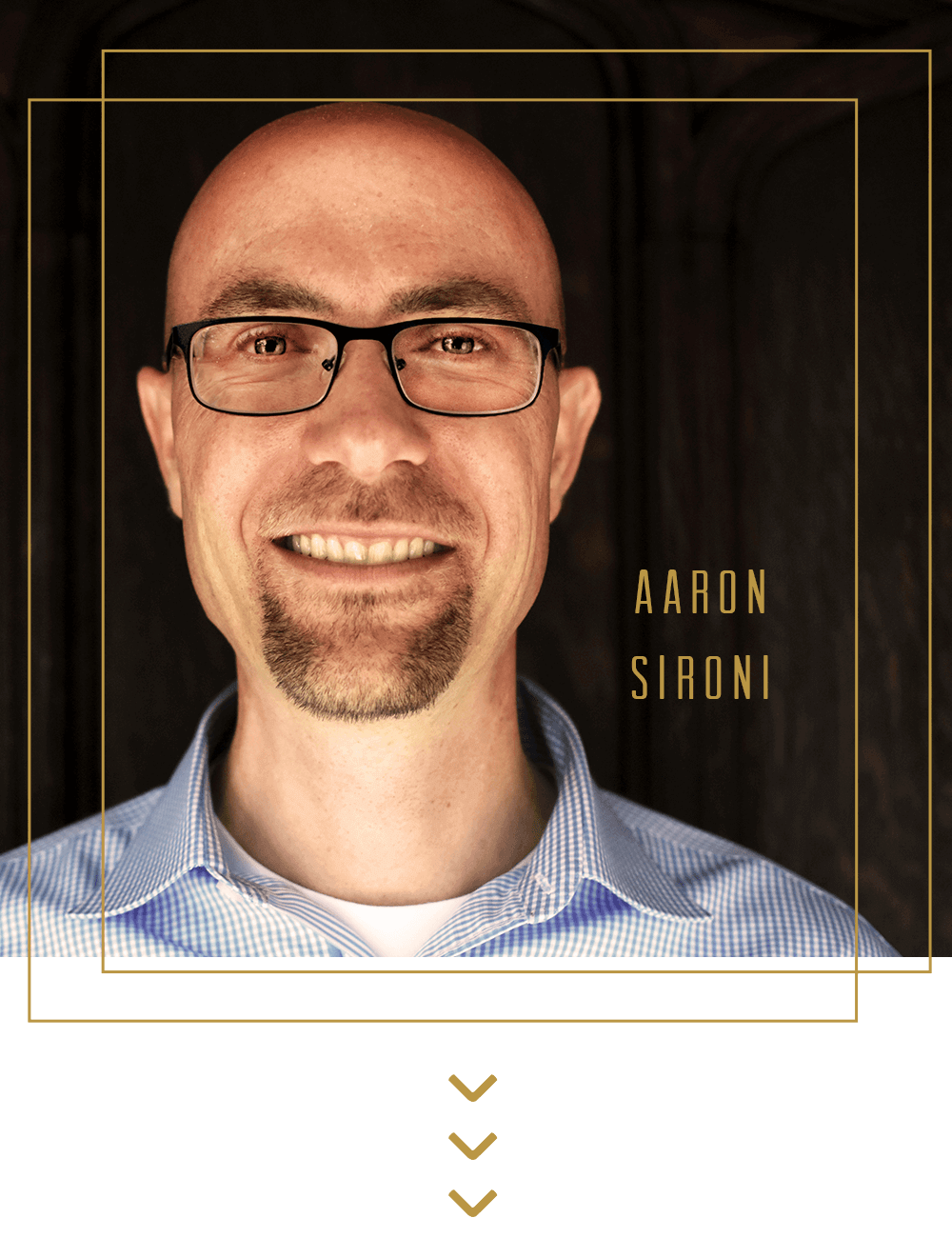
Aaron SironiDavid Gunner Gundersen
May 4, 2026
What if some of the most important biblical passages for your marriage don't explicitly talk about husbands and wives? In this episode, Gunner Gundersen and Aaron Sironi explore how the book of Philippians offers a powerful framework for navigating conflict and cultivating unity in marriage. They uncover how he gospel itself shapes the way husbands and wives relate to one another.
Aaron shares how lasting change in marriage doesn’t come primarily through techniques but through adopting the mind of Christ: a posture of humility, sacrificial love, and deep attentiveness to one another’s burdens. They’ll cover why conflict in marriage is inevitable and how it can become redemptive, what it looks like to “re-do” conflict in a gospel-shaped way, and how Philippians 2 reframes how we approach our spouse’s struggles.
Whether you’re married, counseling others, or simply seeking to grow in Christlike relationships, this conversation offers a hopeful and deeply practical vision for change.
Mentioned in this episode: Please consider giving to CCEF to help bring more counseling resources and training to the church. You can give at ccef.org/donate.
00:00 Welcome and introduction
00:24 A word from Jonathan Holmes
01:34 Introducing Aaron Sironi
02:48 Aaron shares about his family and life in Montana
04:50 From child and family counseling to marriage counseling
09:59 Upstream vs. downstream issues in relationships
12:05 Why marriage wisdom extends beyond “marriage passages”
16:03 Why Philippians? A surprising place for marriage insight
18:09 Conflict, disunity, and the theme of unity in Philippians
21:41 What to do when conflict doesn’t go well
26:29 Why silence in conflict is often misunderstood
29:14 The mind of Christ as the foundation for unity
31:00 Christ’s humility and the gospel pattern (Philippians 2)
33:30 Bearing your spouse’s burdens as Christ bears ours
35:26 Marriage as a reflection of the gospel
36:35 Christ as the “upstream” source of transformation
38:44 The richness of Scripture for real-life relationships
39:55 Closing reflections
Hello everyone and welcome back to our CCEF podcast, Where Life and Scripture Meet. My name is Gunner Gundersen and I have the privilege of serving as the Dean of Faculty with CCEF. And as we get started today, we are very happy to have our new Executive Director, Jonathan Holmes, drop by to share just a brief word with you. So Jonathan, thanks for coming by.
Hey Gunner and Aaron, it's a joy to be here with you today. And to all of our friends, we are so glad that you're a part of the ongoing conversations that we get to enjoy here together on “Where Life and Scripture Meet.” If this podcast has ever helped you care for someone, navigate a hard conversation, or feel a little less alone in your struggles, I would just ask you to consider supporting us today. We're working to bring more resources and training like this to local churches, both here in the US and around the world, and we're hoping to raise $550,000 by the end of May. Your support, both financial and prayer, helps all of us at CCEF to extend wise biblical care to people and communities everywhere. So if you want to give and you're able to, I would encourage you to visit ccef.org/donate. That's ccef.org/donate. And thank you so much for listening, and for being a partner in this work that we do together.
Jonathan, it's great to see you. Thanks so much for stopping by.
Thank you.
Well, today we are honored to have with us CCEF faculty member and counselor, Aaron Sironi. It has been a little bit since we've had the privilege of hearing Aaron and having his wisdom on the podcast here. But welcome, brother.
I just want to tell folks a little bit about you. You have served with CCEF since 2008 and hold a Master of Science in marital and family therapy from Fuller Theological Seminary. You've earned
counseling certificates from CCEF and have so much of the CCEF DNA and heartbeat and accent in you and in the work that you produce, which we're so grateful for. You're also a licensed clinical professional counselor, and you've counseled really in a diversity of settings: in community mental health, psychiatric hospitals, outpatient settings. And you have a passion really for building strong relationships with local churches and then really coming alongside pastors and ministers by helping with consultation, training, counseling services. And many might not know that in addition to your work at CCEF, you also serve on the board of CCEF Montana, which is an affiliate counseling office in the great city of Billings, Montana. So, Aaron, welcome to the podcast.
Thank you Gunner, it's great to be here with you.
Hey, could you just start by telling us a little about yourself and your family before we move into our topic for today?
I'd love to. So as you said, my family and I live in Billings, Montana out in the West, western part of the United States, and we love life here together. I'm married to Kelly, my best friend, and we have five children. Our oldest is 20 and our youngest just turned 10. So we have a range of activities and maturity levels, but really enjoy this season of life together as most of us are still at home. What a privilege to be a husband and a father in Christ’s Church.
Brother, one of my favorite things, it puts a smile on my face right now, about working with you is getting these regular messages with photos from whatever it is that you're doing with members of your family. I mean, it just could be one month it's snowmobiling, and the next month it's a hunting trip, and the next it's a soccer tournament, and just this variety of activities there kind of in the great mountain West. And it's just sweet to see the joy that you take in your family, the time that you all get to spend together, and to see you doing that in a really, really beautiful part of the country. So it does make me a little envious whenever I get those photos come in, but it makes me really grateful for the time that you're able to spend together out there and the joy that you have in it with your kids and your wife, Kelly.
Yeah, thank you, Gunner. We do have a lot of fun. We like to play. We like to be out in the mountains and on the streams and in the lakes. We just like to be active. Yeah, we are in a very beautiful place in the country, but the more I travel, the more I see beauty in every corner of God's great creation and wonderful things to do with good people and wonderful things to do just about everywhere.
That's great. So you're a Montana enthusiast, but not a Montana exclusivist. Is that fair?
That’s right, well put.
I've never said those words in a sentence, and that was a mouthful, but it came to mind.
Hey, I know I mentioned that you have a significant background in training in marriage and family dynamics and marriage and family counseling. So as we dive into our topic for today, could you just share for a moment how you got involved in marriage counseling and biblical counseling as well.
Absolutely. So I first became engaged with marriage counseling really before I even knew what it was and what it would entail as a counselor. I was in college my senior year and just dreaming and praying about what I would do when I graduated with a degree in psychology. And I remember a very specific prayer one evening where I just said, “Lord, if there's anything that I could do… I would love to help people with their marriage relationship.”
And I didn't even really know what I was asking. Within a few months, I was working in the field as a child and family counselor and working with families where the families were referred to us. It was a county agency and they were referred to us from very difficult situations where there was abuse and neglect happening and children were either at risk of being removed from their homes very tragically and sadly, or being reunified to their homes after being already taken away and placed in a foster care system or a residential system. And as I started to work with those families, that was probably the hardest year as a counselor that I've ever had, and getting to know the difficulties, the challenges, the lack of resources that many of these families experience and live day in, day out, the cultures involved. I was largely working with the children, but also in the context of doing family counseling. And the more I did that, the more I realized that if I could help the parents in their own relationship and stabilize, bring stability there, if I could help them to love each other and care for each other, if I could help them parent together in ways where they could actually care for their kids instead of being so divided and at odds with one another that they can't do that, they don't have the bandwidth to do that. If I could actually work with mom and dad, that may be the biggest gift, the biggest service that I could do to the family as a whole, but to the individual children in that home as well. And so I started to explore what would it look like to get a degree in marriage and family therapy. And if I could serve families in that way, I would really love to learn how that works and how to be effective. So that's really what drove me to a degree in marriage and family therapy and moved out to California where I did get some great training. One of my friends, I was in a dual track master's PhD program at Fuller in the School of Psychology, and one of my buddies was starting his dissertation and, actually, the research that would go into his dissertation. And he was working with Susan Johnson, who was a psychologist from the University of Ottawa in Canada. And she was the leading marriage therapist. She's no longer alive, but really led the field for decades. And he was doing research back in the day when we had cassette tapes. They would record sessions. She would record sessions, and then she would mail, snail mail, through the postal service, cassettes of sessions that she was having with couples. And then we'd sit down in a small group, my friend and about three of us would sit down and start coding and listening to very carefully and picking apart different parts of not just the counseling but the couples' conversations to understand how to really interrupt unhealthy and destructive communication and conflict patterns…just week after week listening to a brilliant counselor, a brilliant marriage therapist, and work with couples and care for them. It just grew a joy and an interest more and more in my own heart to become skillful and to do that well with couples. So that's really where it got started for me.
Well, thanks for sharing that story, Aaron. It struck me that part of that story carries a theme that we're going to get to, I think, repeatedly in this conversation, which is: there are issues that are upstream and downstream of other issues. And it seems like you recognized early on in God's providence that the marriage was upstream of the parenting. and the children's experience was gonna be downstream of the health of the marriage. And that led you to focus somewhere that you thought could do more good downstream eventually than maybe what you had been involved in at that time. Obviously all ministries to all people are important, but you sensed a calling to focus on a particular kind of arena of human relationships in that. And we're gonna talk about that as we kind of go through this conversation.
Really where that relates is when we think about what the Bible says about marriage, it's really natural to go to kind of “the marriage passages” like Ephesians 5, 1 Peter 3, Genesis 2, Song of Songs. And we would both agree these are wonderful, and they certainly provide a vision and a framework for Christian marriage. But I had a conversation with the pastor recently, you and I have had this conversation recently as well, where we really agreed that some of the most important scriptures for our marriages aren't actually talking about marriage. They don't name marriage. They're not talking about husband and wife directly. And yet they are some of the most important passages, teachings, principles, frameworks for the health and growth of our Christian marriages.
And so today we want to really talk about growing in marital unity, addressing marital conflict from a book that might not jump to mind when we think about the topic of conflict in marriage or unity in marriage, could you talk a little bit about that dynamic of how teaching about marriage might come from surprising places, and someplace that you've been digging into recently?
That's right. And as a marriage counselor who's been doing this for several decades, when I think of the number of times that I've turned to Ephesians 5 or Colossians 3 or 1 Peter 3 or Genesis 1 and 2, those very focused places where Scripture speaks directly to marriages in particular, and I think of how many times I have gone to those passages versus to other passages from Genesis all the way through Revelation, I would say the vast majority of my work and relational wisdom comes outside those passages, not, as you're saying, that those passages aren't essential and hugely important for us in marriage.
But what happens is you have a couple who comes in for counseling and they're struggling and they're saying, “Well, we have a difficulty in our marriage relationship,” and so they're they're turning just to those passages and they're missing, say, let's say they're turning to Ephesians 5. And yet they're missing that Ephesians 5 builds on Ephesians 1, and Ephesians 2, and Ephesians 3, and Ephesians 4, and into the first part of 5. Right, before Paul even talks and addresses wives and then husbands, he has laid the groundwork and this is a very, you know, it's built upon everything he's already said. And when I think of even marriage counseling and watching others counsel, so much of the wisdom, and the humility, and the love that we're striving to cultivate in our relationship, all of Scripture speaks to those things. And there's just a wealth and a depth and a richness that we can glean from other passages that immediately impact our relationship with our spouse.
I was just reminded there, Aaron, of maybe a word of encouragement I would offer to pastors in particular and teachers, something that I took comfort in in my years as a pastor, and it's this: sometimes when I was encountering a number of very difficult situations in the life of our church, in people's sanctification, in their relationships, in their struggles, in their marriages, it could start to feel like, how could I or we as a ministry team ever be able to do what's needed interpersonally to help the people that God has entrusted to our care. Even as we encourage the entire body to be active and encouraging one another and building one another up, sometimes it just felt like the challenges outpaced the resources that we had. And certainly that's true from a human level that we depend on the Lord and his multifaceted work to help his people. But the one application that I just offer by way of encouragement was that I had to realize that the sequential expositional teaching of the scriptures was something God intended to and promises to use in the lives of his people in these thorny, specific, very contoured, textured things they're facing. And so it's not that Scripture is kind of irrelevant to people's growth in a particular area until you get to a passage that's talking about that area by name, but rather that the overall impact the Spirit has in our lives through the Word is meaningful. Let's say in this instance, for our marriages, even when it's not talking directly about marriage.
And that was comforting to me and encouraging to me to know that the Lord was using that as one of many other ways to grow his people, but certainly a central way. Now, as we talk about this, there's a book you've been digging into recently that might be surprising when it comes to its impact and import for marriage. Can you talk a bit about that?
I'd love to. The book that I've really been digging into and enjoying is Philippians. It's a small book, right, four chapters. Well, most people who have read Scripture know Philippians and love Philippians. And the way that I got to Philippians was not directly, it's as a marriage counselor working with couples, and listening to and watching others, who are really gifted at working with couples and asking “What are they doing? What's at the heart of what they're actually encouraging and fostering in this relationship between a husband and a wife? What's at the heart of that?” No matter what approach it is, no matter if it's more of a cognitive approach or more of an emotional focused approach or whatever it is, what is actually happening and what are they trying to grow between this husband and wife? And the more that I got my eyes on that, the center of really how a husband and wife relate together and do so in increasingly loving and humble and gracious ways, Philippians came to mind and specifically Philippians 4. So that's why, excuse me, Philippians 2. So as I started to look at Philippians 2 and say, “Well, let me understand this whole passage, this whole book, what is Paul trying to do here?” Things just started to explode off the page, off of every chapter. I, just, yeah, it fascinates me how relevant and how central the message or the messages of Philippians are to our marriage relationships.
Yeah. So with, with Philippians in mind, as you're digging into this book, you're, you're seeing that Philippians 2 in particular, but also specific themes are really relevant. What's maybe an initial theme that you start to see as you dig in to the book?
Yeah, good question. So it's very clear from the first chapter of Philippians, Paul is writing to a church that he loves, that he has a very close relationship, even a partnership with, and they're struggling with disunity, conflict within the church. And you see him building a case for…”What is unity? How does it work? How does it move? How does it speak? How does it think? What's the mindset of unity?”
And even in the final chapter, in chapter 4, he addresses, he has in 1, 2, and 3 this relationship in mind between two prominent leaders in the church, Euodia and Syntyche. In chapter 4, after really speaking and teaching and illustrating even what unity is and does and how it thinks, then he addresses this conflict between Euodia and Syntyche in chapter 4 and points them back to everything he's already done in chapters 1, 2, 3.
And so, it couldn't be more relevant for us in marriage, right? We are different people. I am not like my wife. She is not like me in very fundamental ways. We think differently. We have different priorities. We have different convictions. And yet, we are called to live together, to serve together, and to love one another deeply and to be fruitful in Christ's kingdom. And yet because we are very different people, we are going to have conflict. We're going to disagree. I'm going to offend my wife. I'm going to hurt my wife. And I'm going to disagree with her and likewise. And so how do we do that well in a way that is, as Paul says, how do we walk with each other well in a way that is worthy of the gospel? Because the problem is when we have conflict, we're at our worst and we become brutish in our thinking, in our behaviors, and we say things we regret and that are hurtful and do things that are not good, that could even be destructive, and we have to have something that is powerful enough to orient us, not just in the conflict, not just in the disagreement, but before that might preempt conflicts and afterward.
The beauty of marriage is that almost always when you have a conflict and it doesn't go well, you almost always have a chance to redo that conflict, to go back to it. And couples who can do that and actually reengage a conflict that didn't resolve well, didn't end well, when we do that, we have a chance to do it in a new way and in a different place, right? And oftentimes successfully in a God-honoring way, couples who don't do that really become, start to drift further and further apart, and become more alienated and estranged from each other and the relationship really suffers as a result.
I remember a seminary professor who once said, “The mark of a saint is not ‘how well we're doing, but what we do when we're not doing well.’” And your comment there really reminds me of that, that we are going to have struggles in the best of marriages. But a key question is, what do we do with the grace of Christ that's offered to us in the aftermath of that? And what do we do with his call to have our minds renewed? And our spirits settled into and entrusting things to him and then to go and seek practically to do differently and redemptively what we might have done in a way that created more hardship before. And there is typically, as you said, an opportunity to return and to make another effort. And if it has been sin on our part to repent. and experience the Lord's grace and prayerfully the grace of a spouse in the midst of that.
Right? And when we go back with a different mind, right, with a different heart and are able to humble ourselves before our spouse and re-engage the disagreement or the conflict, we learn something, right? Because we're able to speak in a way that for a variety of reasons we couldn't do when we first started to get into a conflict. And we're able to hear things that we weren't able to hear. And it does transform us.
And Gunner, between you and I and everyone who's listening, that is what we're doing in marriage counseling. A large part of what we're doing is helping couples to hear and to speak in ways that they can hear each other, that they can actually understand each other and understand things that they didn't understand and be able to speak in a way that makes it easier for the other person to hear. And as they start to do that, with our help, it transforms their conflicts because they're bearing in mind what they've heard, what they've learned. We're learning how to speak in ways that actually don't make it harder for our spouse to hear us and actually provoke them, tempt them to anger, to shutting things down, right? But actually to engage with us…then we grow and we benefit, and our conflicts start to transform.
You know, on a personal note, Aaron, I was thinking of a situation in the past interaction with Cindi and I, my wife. And I remember we're talking about a parenting situation and a child who was particularly struggling at that time. And I remember that as she was just sharing some of her heart and her experience in trying to be helpful to a child that was being very difficult in a long-standing way at that time. that I was growing very frustrated internally. And as she finished sharing, I just was silent for a little while. And then I think I just changed the topic, but I didn't explain what was happening.
And I really had to step back and think, “What is it that's happening inside me?” Because I wasn't loving her well as a friend. I wasn't leading very well in that. It didn't lead to a conflict. And that's because I think she was gracious in that moment, but… it wasn't the best interaction in what I could have and should have offered by way of encouragement, or support, or turning us toward prayer together. And I realized it was that I had for a while felt very helpless in terms of what I could or could not do in our child's life at this time. And so when she shared about how difficult things were for her and some of the difficulties she was observing, it made me feel helpless, and I didn't like that.
And I wanted to be able to offer something that would fix it or say it was gonna be better, but I didn't have anything. And I think what I could have done is taken us together to the Lord in prayer, but because I was in my own thoughts and self pity about it, that's not where I went. And I realized there's an opportunity here for me to actually go back and explain, like I just was feeling the weight of the burden of this and I didn't communicate well, I just kind of shut down and I think those opportunities are very important to continue to learn how to practice that. And even in that moment, I realized when this takes place in the future, when this kind of incident comes up, it'd be wise for me to say…let me just take this burden I'm carrying and just say… “Can we pray about that? I really don't know that I have anything that would be helpful, but I have to trust the Lord does. And thank you so much for sharing what's on your heart.”
Yeah, what a great example. There's so much…so when we're silent, when we change the conversation topic, right? When we maybe even walk away physically or roll over, our spouses are left to interpret that, right? They're going to connect the dots. And oftentimes it's not in the best possible light. Right, so your wife in that situation…who knows what she was thinking? But probably not, she had no idea that you were saying and feeling, “I feel helpless. I feel, I don't know what to do. I'm overwhelmed as well. And now seeing and hearing that you're really struggling in the same way, I feel even more overwhelmed and unable to say something that can change this or that can be helpful, right?” And she doesn't know that until you come back and say, “Actually, here’s what was happening for me.”
9 times out of 10, she's connecting the dots in a different way, like, “You're disconnected, you don't care, you're judging her, and you're thinking, ‘Oh, why are you despairing? aren't you more mature than that?’” whatever. The person who's met with silence or someone who withdraws and pulls away, connects things often in a very painful way. So yeah, what a great illustration in these difficult conversations to not fade, to not say nothing, right? And to be even more explicit as you were by saying, you know, “Can we pray? Can we turn to the Lord? I don't know what to say. I don't know what to do. I'm overwhelmed, right? It's not that I'm not thinking anything, but that I'm thinking five things, right? And I just don't know what to say.” And yeah, a perfect example of what happens when we're able to come back to a conflict or even a conversation that's challenging. It didn't sound like that was a conflict, but certainly a difficult conversation with grief and sorrow and struggling in there.
Yeah. And it's really that seeking to come back with a different mind or a renewed mind. And with that in mind, could you talk a little bit about, how does the book of Philippians, which is partially addressing a conflict and some conflicts in the Philippian church, how does it lead us to the gospel as, you know, the key to our marriage relationships? You know, obviously Paul doesn't just address the conflict, but then talks significantly about unity, which many identify as a substantial thread running through Philippians…and he does that through the gospel. Can you talk a little bit about how the book of Philippians does this?
Yeah, so very early on in chapter 2, when addressing the church of Philippi with this conflict in mind, he says, “Complete my joy by being of the same mind, having the same love, being in full accord and of one mind.” When he's talking to Euodia and Syntyche in chapter 4, he says, you know, depending on the translation, he says very explicitly, “Agree in the Lord,” right, or, “Have the same mind.” And then later he says, “Have the same mind as of Christ Jesus.” He's not saying you have to agree on every point, and every perspective, and every priority, and share the same opinion. No, he's not saying that. He's saying “Have the same mind, which is the mind of Christ.” That is where you—that's the engine that drives our unity in Christian marriage—is to have the mind of Christ. And then he goes directly into the gospel where he says, you know, it's a very familiar passage to us in Philippians 2, where he says, “Have this mind among yourselves, which is yours in Christ Jesus, who though he was in the form of God did not count equality with God, a thing to be grasped, but emptied himself by taking the form of a servant being born in the likeness of men. And being found in human form, he humbled himself by becoming obedient to the point of death, even death on a cross…”
And then he's exalted, right, “At the name of Jesus, every knee shall bow, every tongue confess that Jesus Christ is Lord. What does it look like to have that mindset? Like the mindset of Christ that, I mean, just on the surface, that's humble, that serves the other person and does so sacrificially. And for me, things really opened up when I realized through other people, through other theologians, where they said, “What is Paul doing here? He's summarizing—this Christ hymn that we see in Philippians 2—he's summarizing what Isaiah said back in the “Suffering Servant” passages and specifically in chapter 53 where Jesus, excuse me, the Messiah, is described as “a man of sorrows and acquainted with grief.” And as you're reading that Isaiah passage, saying, well, “Who is this Messiah, this suffering servant humble to the core? Who is he and why is he a man of sorrows? Why is he acquainted with grief?” And within a couple of verses, it's very clear what's happening. He is taking on willingly, and totally with the whole heart, voluntarily taking on our sorrows, our griefs, our suffering, our pain, our sin, our iniquities, and making them his own. He's shouldering them himself. That is what this servant is doing. And so when Paul is talking through this, the heart, just a very snapshot of the gospel of Jesus Christ: who he is, what his heart is, and why he's exalted. You see a Savior who sees us, who knows us, and who takes on as his own our suffering, our pain, even our infirmities, and especially our iniquity, our sin. So when Paul is talking to the Philippians and he's saying, have that mindset; do that. That is who Christ is to you. That is your Savior, right? That is your advocate. That is your Lord. That is the core of who you are. Now, have that mindset with each other. And I think of what does it look like?
So, you know, in that same passage, he says, “Looking not only to your own interests, but also to the interests of others,” you're thinking, “Well, what are those interests?” Right? Well, if he's referring back to Isaiah 53, all of sudden we know what those interests are. They're the things that are hard that my spouse is afflicted by, her suffering, her pain points, her afflictions, even the things she's struggling with, the sins, right, and the effects of those sins in her life and others' lives. Those are the interests that Paul is saying. Look, when we have the mindset of Christ, we are actually taking up, shouldering as our own, our spouse's suffering and interests and concerns and even her struggles, her temptations, her weaknesses. And as you said earlier, Gunner, as we do that, if we grow in doing that with our spouse and our spouse for us, we're going to avoid a lot of conflicts, right? Because we are doing the opposite of selfish ambition and vain conceit, as he says in that same passage. We're actually seeking to care for, and take up, and shoulder, and bear our spouse's burdens. And so we're going to get upstream from conflict and even preempt conflict. It informs me what to do in conflict, which is how can I get in here and get my eyes on and wrap my mind around and respond to what my wife is saying is hard for her, what she's bumping up against, what I've done that has offended, hurt, stepped on her toes, know, has overrun her, whatever. How do I get my eyes on that? And even after conflict where I need to go back and re-engage my wife, how can I go back to her with that mindset?
And so I've just been fascinated, like as we grow in that, this isn't just a conflict tool. This is the heart of who our Savior is. This is what he has done for us. This is our identity. And this is now how we relate to each other. And if I can grow, if my wife and I can grow in doing that, and having that mindset with each other, and repenting when we don't, when we're motivated by self-interest, and by pride—right—and carelessness, and lacking consideration…whenever we fail there, we can come back and repent, and confess that, and pick it up again, and really strain with all our every cell in our body, every, you know, both of our ears to listening and seeing each other and caring for each other in those ways. As we do that both before, during, and after conflict, our marriage actually show something of the gospel. And it's a marriage worthy of the gospel.
Aaron, I've been thinking about how we talked at the beginning about how there are things that are upstream from other things, and those upstream things will shape what is downstream. And we're saying ultimately, the ultimate upstream issue, is the love of Christ for us that we have received, that changes us, that softens us, that we receive, that we are secure in, that we're forgiven by. And then our opportunity with our eyes on him to be transformed continually into his image, into for us laying down our very dangerous sense of entitlement, and picking up, as he did, a sense of servanthood toward others and our spouse in particular, that through receiving his love and then seeking to imitate it as well with his power within us, that's upstream of what happens in our marriages. And then the huge blessing is that even when downstream, because of our indwelling sin nature, we still make missteps, we still hurt one another, we still don't listen, we still prefer ourselves above our spouse, there is still the opportunity because of that same grace and love that covers us to turn around and come back with a mind renewed by that same love and a mind renewed by that same example and to work through those issues together as much as we can even if we need to do that more on our own and there isn't as full a
participation as we might like from our spouse, the Lord still enables us to work those things through his Spirit in our souls and to grow in our marriages. And it's sweet to know that there's both Christ upstream, and then He is still helping us clean up further downstream as well.
Yeah. Yeah. That's exactly right. And as we do that and grow in that, that's a lifetime of growth right there. And that is what, it isn't just about conflict. It isn't just about communication and techniques and, although those things can be very, very helpful, it's about growing in a way that reflects who Jesus is right in the very place in our heart, our most difficult relationship, which is always going to be marriage almost.
Yeah. Well, I want to come full circle on this as we conclude and say, I think one of the most hope-giving things about this conversation and the way that the Lord has kind of led us to it is just the realization of the riches of Scripture, of the treasures of the Word of God, that the Holy
Spirit has breathed out this incredible repository of revelation that truly does give us what we need for life and godliness. And it does that in these ways that, the deeper we go into it, the more creative we realize it really is. That a book that is not speaking directly about marriage and the way we might perceive it in systematic categories is saying things that are transformative for the way that we perceive of ourselves as husband and wife, the way we perceive of Christian relationships, and then the way that we go about the more difficult moments of our marriage relationship as well. And I'm so grateful for the riches of Scripture and the opportunity to spend a little bit of time unpacking something you've been working on today. So, thank you so much for joining us today, Aaron, and we look forward to having you back soon.
Yeah, thank you, Gunner. It's a pleasure to be here with you.

Faculty
Aaron is a faculty member and counselor at CCEF, where he has served since 2008. He holds a master of science in marital and family therapy from Fuller Theological Seminary and has earned counseling certificates from CCEF. Aaron is a licensed clinical professional counselor (LCPC) and has counseled in community mental health, psychiatric hospital, and outpatient settings. He has a passion for building strong relationships with local churches and coming alongside pastoral ministers through consultation, training, and counseling services. In addition to his work at CCEF, Aaron serves on the board of CCEF Montana, an affiliate counseling office in Billings, MT.
Aaron Sironi's Resources
Dean of Faculty
Gunner is the Dean of Faculty at CCEF, where he has served since 2024. He holds a PhD in biblical theology from the Southern Baptist Theological Seminary and a master of theology and master of divinity from the Master’s Seminary. Prior to joining CCEF, Gunner served as a lead pastor for seven years, after working for fifteen years in Christian higher education as a resident director, director of student life, associate dean of men, and biblical counseling professor. Gunner has a passion for helping believers live consciously in the story Scripture tells, equipping the local church for interpersonal ministry, strengthening pastors, and biblical preaching and teaching. He has published the Psalms notes for The Grace and Truth Study Bible (Zondervan, 2021), What If I Don’t Feel Like Going to Church? (Crossway, 2020), and numerous essays and articles on the Psalms and adoption.
David Gunner Gundersen's Resources
Sign up for our weekly email and receive access to a conference talk by Darby Strickland on helping trauma sufferers find home in Christ.
Loading form...