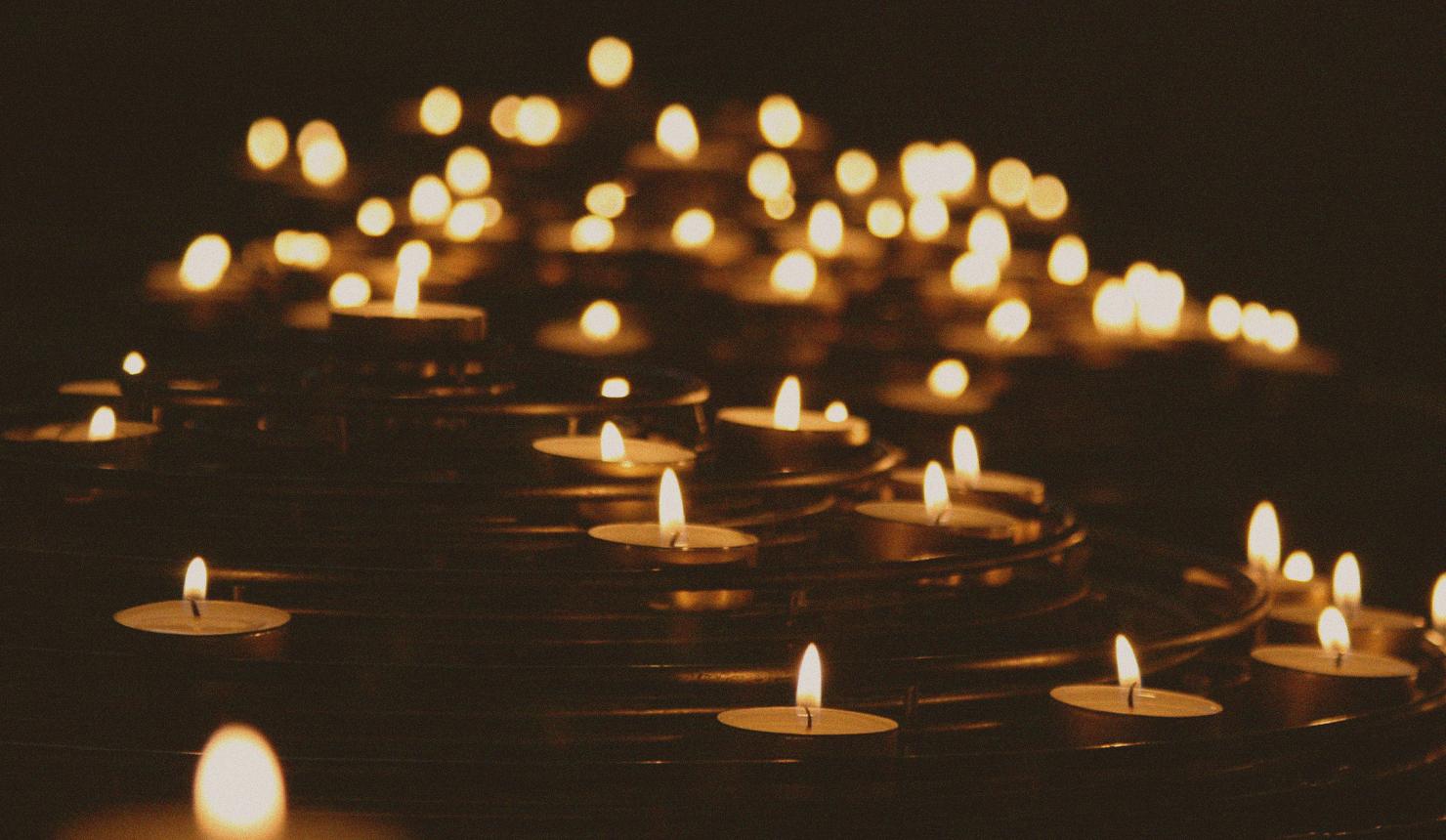
We don’t usually think of Advent as a season of darkness. Everywhere we turn, we see Christmas lights: porches glowing, trees sparkling, and windowsills warmed by candles. The world insists this is the month of cheer, brightness, and celebration. But for many who carry sorrow or trauma, Advent can feel like the loneliest stretch of the year. The contrast between all that light and your own dimming hope can feel almost too sharp to bear. We call this the season of light, but Scripture reminds us that Advent began in the dark.
It began with people stumbling through deep shadows, hope worn thin, hearts weighed down, and wounds deepened. Isaiah speaks straight into that darkness and names it honestly: “The people walking in darkness have seen a great light” (Isa 9:2). This is the starting place of Advent—not sentimentality, but shadows.
The Darkness Christ Entered
Look at the world Jesus was born into. A teenage girl was giving birth far from home . . . and a violent king was willing to murder all the young boys in that town in the hope of exterminating the girl’s child. Families were fleeing in the night just to survive. The powerful exploited the weak, slavery was an ordinary part of life, and the nation of Israel was crushed under foreign rule. This is not calm. This is not bright.
This is not sentimental.
This sounds more like a pot about to boil over.
Yet, this is where the Light appears.
But Isaiah isn’t announcing merely a shift in the world’s illumination. He’s announcing a person, our Lord, who comes close to frightened and distressed hearts. The Light arrives in the darkness, not after it has lifted. Jesus does not wait for your anguish to recede. He steps into it.
Where Isaiah begins, the book of Revelation ends, with Light driving out the night forever: “Night will be no more . . . for the Lord God will be their light” (Rev 22:5). Advent holds these two truths together: We walk through darkness, and the Light has come to find us.
The Darkness We Carry
Though the Light has come, we still carry shadows with us. The darkness is not yet vanquished. It lingers, menacing us with fear, oppression, old wounds, and disorienting memories. Yet the Light remains beside us. He becomes “a lamp for [our] feet” (Ps 119:105), guiding each small step.
When we see darkness gathering ahead, we wonder if that lamp will flicker or fail. We wonder if God remembers us at all. Still, we walk on—slowly, heavily, unsure of our footing—but drawn forward by the Light that “shines in the darkness, and the darkness has not overcome it” (John 1:5).
It is to people walking in anguish that Isaiah says, “Look. The Light has come.”
The Light That Walks with Us
Isaiah isn’t the only one who understands our night. Three psalms stand beside him like steady companions, naming what we often feel but struggle to say aloud. Each offers a different reassurance of the Lord’s care for his people in the dark.
The Light stays with us. “Even though I walk through the valley of the shadow of death, I will fear no evil, for you are with me” (Psalm 23:4). This reassurance isn’t poetic exaggeration. The Hebrew for “shadow of death” shares roots with Isaiah’s word for darkness. It is dangerous darkness, the valley where peril feels close and safety feels far.
David is not sprinting out of it. He is walking through it. And the Shepherd walks with him. Which means this: God does not meet us once we escape the valley. He meets us in it.
The Light steadies us. “The LORD is my light and my salvation; whom shall I fear?” (Ps 27:1). Dangerous darkness tries to convince us that fear must define us. Psalm 27 offers a different story. We belong to the One who is our light and our salvation. Fear is real, but the Light holds us fast.
The Light reaches down to rescue us. David describes his darkness like drowning: “The cords of death encompassed me . . . he brought me out into a broad place . . . he rescued me” (Ps 18:4, 19). Perhaps you know that drowning feeling, when sorrow floods your chest and your breathing feels difficult. Psalm 18 shows us a God who does not stay distant. He moves toward his suffering children with unstoppable determination. David paints it in fierce, dramatic strokes: “He bowed the heavens and came down . . . he rode on a cherub and flew . . . out of the brightness before him hailstones and coals of fire broke through his clouds” (Ps 18:9–10, 12). Ours is not a quiet God.
Our Lord tears open the sky to reach his people. The same God who once bent the heavens to rescue Israel has now bent low in the person of Jesus, coming in flesh to pull us out of our darkness with his own hands.
The Light Comes for You
The God who storms the heavens in Psalm 18 is the same God who lay in a manger in Bethlehem—still mighty, still moving toward you, still breaking into your darkness with his Light. Isaiah’s prophecy is still being fulfilled: Those who’ve carried their lives through darkness have been met by a Light stronger than the shadows that surround them. As Advent begins in the dark, may you remember that the Light has come for you. And one day, just as Isaiah promised, the shadows will scatter, the night will lift, and darkness will be no more.
The birth of Jesus, the Christ, announces that in his coming world, darkness cannot exist. He pierces your darkness now so you can walk the road with him, one step at a time. Your destination is sure.