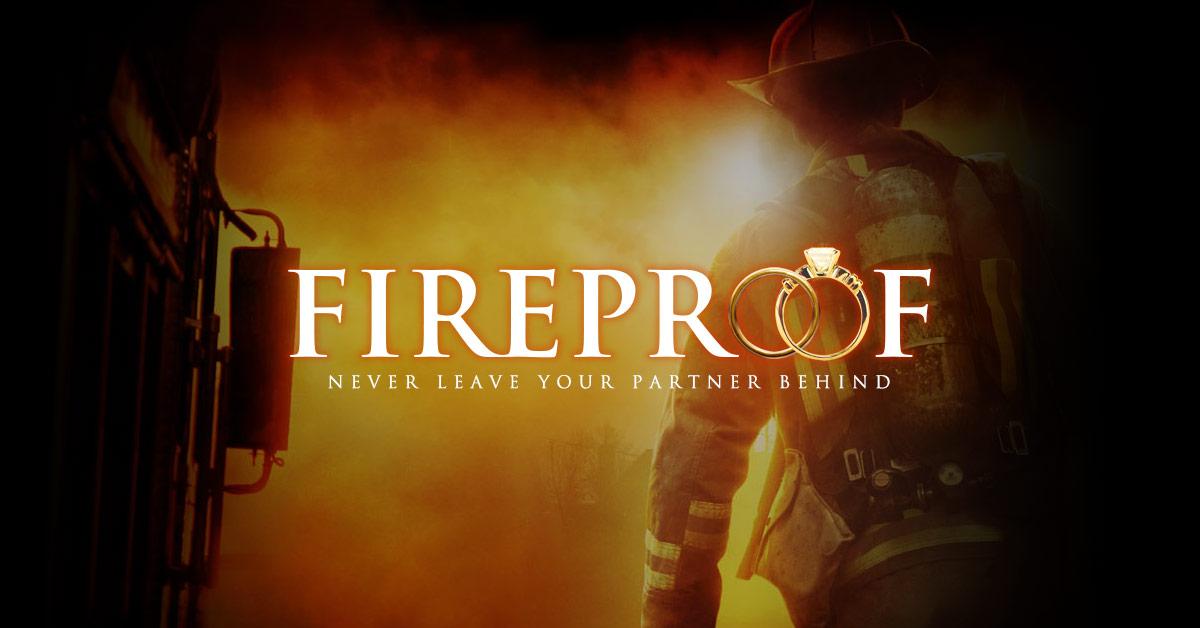
I suspect many of you have already watched the movie Fireproof — the Christian film starring Kirk Cameron as firefighter, Capt. Caleb Holt, who embarks on a “love dare” to salvage his marriage as it teeters at the brink of divorce. Many students, friends, and counselees have asked me if I’ve seen it and have even offered to take me to the theater and watch it with me. In fact, I just watched it on DVD thanks to a student who brought it to class and kindly urged me to watch it. To a person, everyone I’ve spoken to has absolutely loved the movie—found it powerful, inspiring, and for some, an effective call to repentance.
And that’s precisely why I’ve resisted watching it for so long. Let me explain. When I heard the plot involved a marriage on the rocks turned around by a forty day “to do” list of love, I inwardly cringed as I nodded and smiled at others’ approbations. To be honest, I’ve seen so much heart ache and brokenness in marriage counseling that I’m wary of anything that even whiffs of easy answers with a veneer of Bible verses. The fact that the movie has served to launch a Love Dare book, Bible study, curriculum, novel, internet filter (yes, an internet filter), and even tee shirts hasn’t helped. So I didn’t want to watch the movie, and I certainly didn’t want to like it. But . . . I liked it. (Hey, let’s slow down, I’m not ready to say love yet.) So this blog is really for cynics like me who need more reasons to give it a chance, and it is worth giving it a chance.
First of all, Fireproof is not a simplistic treatment of serious marriage problems. It does show us just how ugly broken marriages can be. Sure, there is the normal catalogue of complaints: he’s insensitive, she’s emotional, he never helps around the house, she doesn’t respect me, and the ever present, “I’m not the problem!” But they are portrayed with all of the venom, hatred, despair, and even physical intimidation that takes these common complaints out of the realm of sitcom cuteness and resonates with what we see in the real world and in our own hearts. The first step to getting to the gospel as the solution is seeing just how dark sin really is.
Secondly, just because the solution comes in the form of a “to do” list, love is not portrayed as an easy answer. No, as is always the case, efforts to find the power of love in our own emotions or through our own actions don’t pan out for Caleb Holt. Half way through the love list he finds that his efforts elicit nothing but contempt from his wife and he loses all energy and reasons for continuing on. As I’ve witnessed in counseling, techniques will only take you so far. Without a genuine change of heart, marital work goes nowhere fast.
(Warning: Spoiler… if you haven’t seen the movie and don’t want to know the ending …stop reading!) And, finally, here is where the movie almost lost me but finally won me over. Just as Caleb is about to give up, he meets with his father, who is the one that recommended the love dare to him. As they take a long walk together, Caleb’s father begins to impress upon Caleb his need to do this with God’s power rather than his own. Caleb, who claims no faith, balks at any suggestion that God cares about his problems or would be willing to help. His father begins explaining to him that Caleb is not the good person he claims to be. That he has not met God’s standards. That Jesus had to pay the penalty for his sins. That without Jesus he would have to face God’s judgment. Caleb just couldn’t see the connection. And, quite frankly, neither could I. Caleb was fighting battles in the here and now, not agonizing over his eternal destiny. At this point I found myself with Caleb thinking that this whole love dare thing was a Band-Aid being applied to a severed artery.
But then Caleb asked the million dollar question, “Dad, how am I supposed to keep loving someone who rejects me, over, and over, and over again! How am I supposed to keep loving someone who spits in my face!” As Caleb’s father stands silhouetted against the figure of a cross he answers, “That’s a good question. I don’t think you can give her what you don’t have.” And then the gospel is driven home. Yes, indeed. How can we love in the face of selfishness and rejection when we can’t see that we have rejected God’s perfect love and so have none to offer our spouses. There is only One whose love is so perfect and absolute that it can overcome evil with good. Caleb receives Christ and things begin to change.
I won’t reveal all here, but to Fireproof’s credit there are still many, many difficulties ahead. Again, the grittiness of real life, even real life in Christ, was accurately portrayed. But the gospel of Christ is shown to be the active ingredient in the redemption of the marriage. Does that mean you have to like the movie, too? No, of course not. It’s just a movie, but if you don’t like it I suspect it won’t be because you thought the gospel was portrayed as an easy solution to life’s problems.